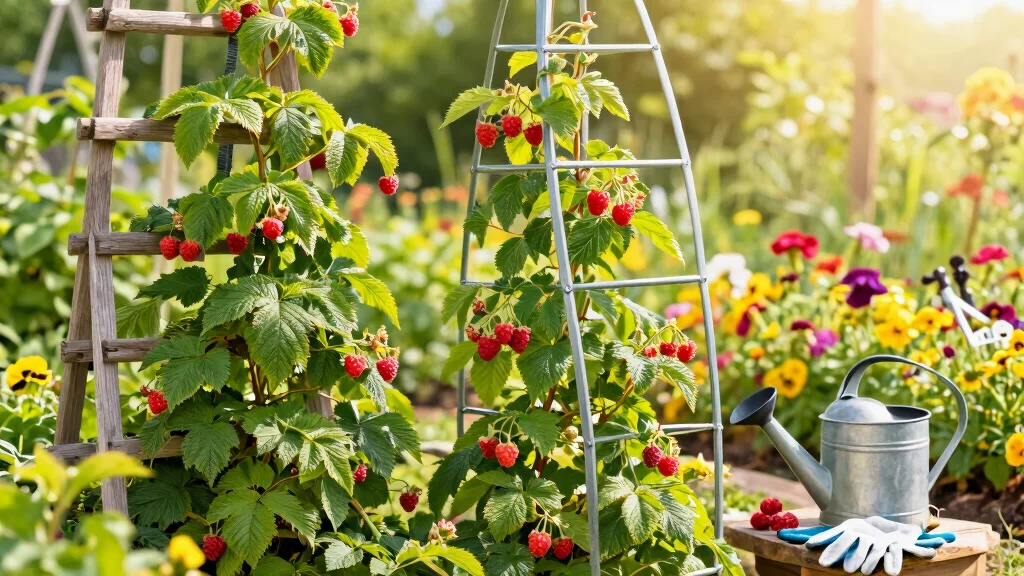
Creating a raspberry trellis can feel like a daunting task, but it doesn’t have to be! With the right ideas and designs, you can keep your raspberry canes organized and your harvest easily accessible. That’s why I put together this post. I want to share some fun and practical raspberry trellis ideas that will help you maximize your garden space and make your berry-picking experience a breeze.
If you’re a gardening enthusiast who loves growing your own fruits, you’re in for a treat. This guide is for anyone who wants to elevate their gardening game, especially those with limited space or just a desire to keep things tidy. Whether you’re a seasoned gardener or just starting, these raspberry trellis ideas will inspire you to get creative and find the perfect solution for your plants.
In this post, you’ll discover ten innovative trellis designs tailored specifically for raspberries. Each option is both practical and aesthetically pleasing, ensuring that your garden looks great while also being functional. You’ll learn about various techniques for vertical gardening, receive tips on how to manage your fruit canes, and find out how to organize your garden for easy access to those delicious berries.
Key Takeaways
– Discover ten unique raspberry trellis ideas to suit various garden styles and space limitations.
– Learn how each trellis design can help you manage your raspberry canes effectively.
– Uncover vertical gardening techniques that maximize yield and simplify harvesting.
– Get practical garden organization tips to ensure easy access to your fruit and a tidy garden.
– Find inspiration for trellis aesthetics that enhance the beauty of your outdoor space while serving a functional purpose.
1. Classic A-Frame Trellis
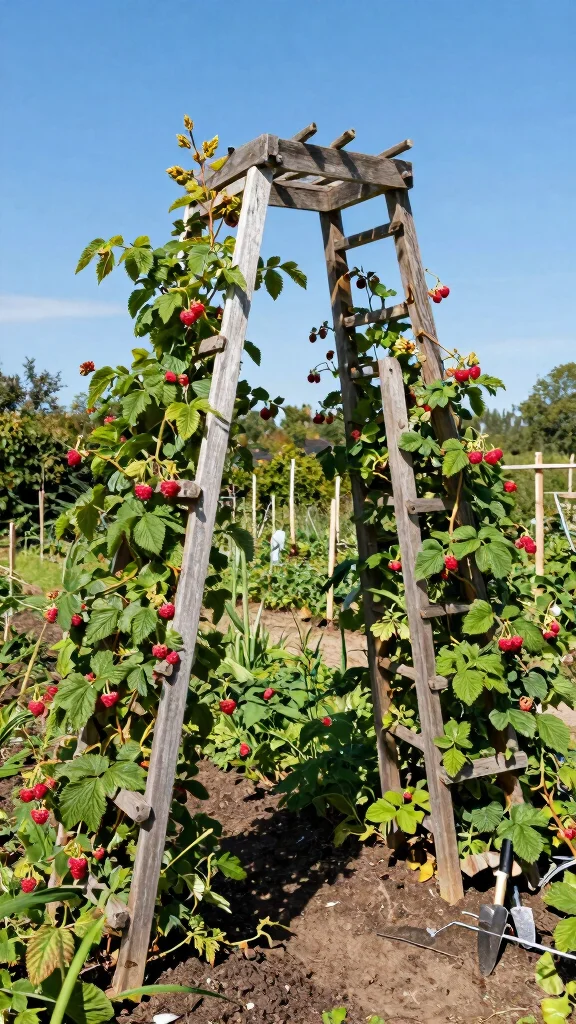
Are you looking for a reliable way to support your raspberry plants? The classic A-frame trellis is a fantastic choice that combines functionality and simplicity. It offers great stability while ensuring your canes receive plenty of sunlight and air circulation, which are vital for healthy growth.
Building this trellis is a breeze. Just lean two wooden frames against each other to form a triangle, and use sturdy stakes and twine to secure your raspberry canes as they climb. This design works wonders for both summer-bearing and everbearing varieties.
Benefits:
– Simple to construct and maintain
– Enhances light and airflow
– Ideal for compact garden spaces
Tips:
– Choose weather-resistant materials for longevity
– Opt for thick twine to support growing canes
– Position it where it receives ample sunlight
2. Wire Trellis System
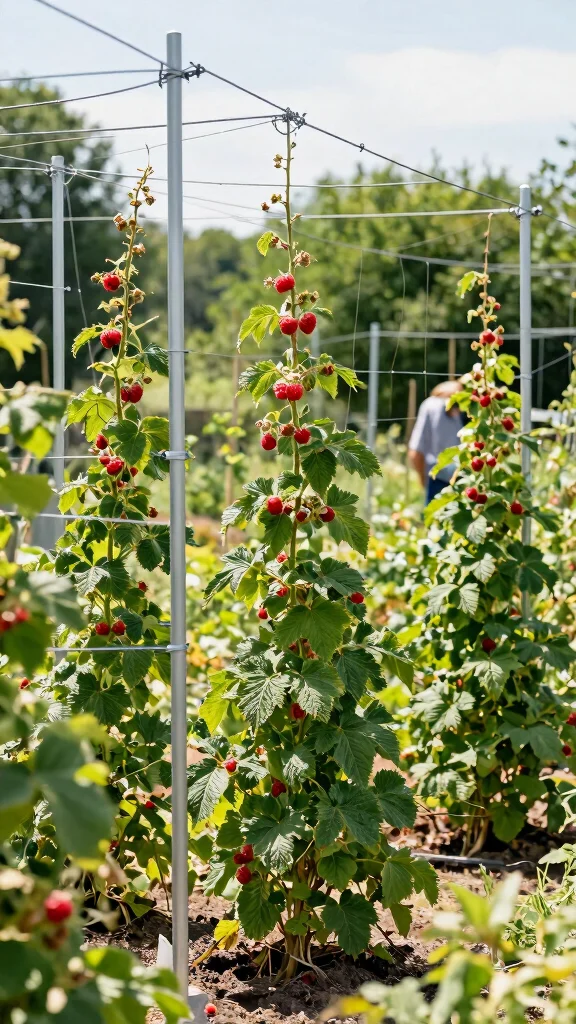
If you want a modern solution for your raspberry plants, consider a wire trellis system. This design allows for a neat, organized growth that not only supports your plants but also makes harvesting easier. With sturdy wire, you can create a grid for optimal vertical growth, ensuring your berries are easy to reach.
To set it up, attach horizontal wires between tall posts, spacing them about 18 inches apart. This method provides solid support, especially for heavier canes, giving your garden a sleek and tidy look.
Benefits:
– Minimalistic and attractive
– Strong support for heavy canes
– Adjustable as plants grow
Tips:
– Use galvanized wire for extra durability
– Consider eye bolts for easy tension adjustments
– Ensure posts are securely set for stability
3. Vertical Garden Planter
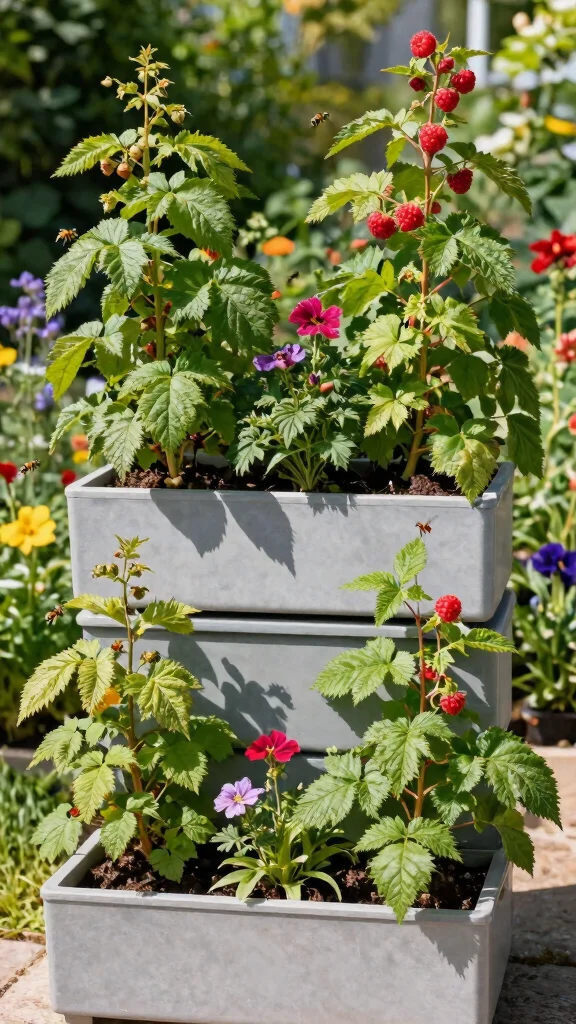
Looking to maximize your growing area without sacrificing style? Vertical garden planters are a perfect solution for urban gardeners or those with limited space. These planters can be stacked or hung, allowing your raspberries to flourish upward, creating a stunning visual display.
Opt for planters that come with built-in trellises to give your canes the support they need. This setup not only conserves ground space but also adds a decorative element to your garden.
Benefits:
– Ideal for tight spaces
– Enhances garden aesthetics
– Eases the harvesting process
Tips:
– Choose durable materials that withstand the weather
– Use a potting mix that retains moisture but drains well
– Consider companion planting with herbs or flowers for added benefits
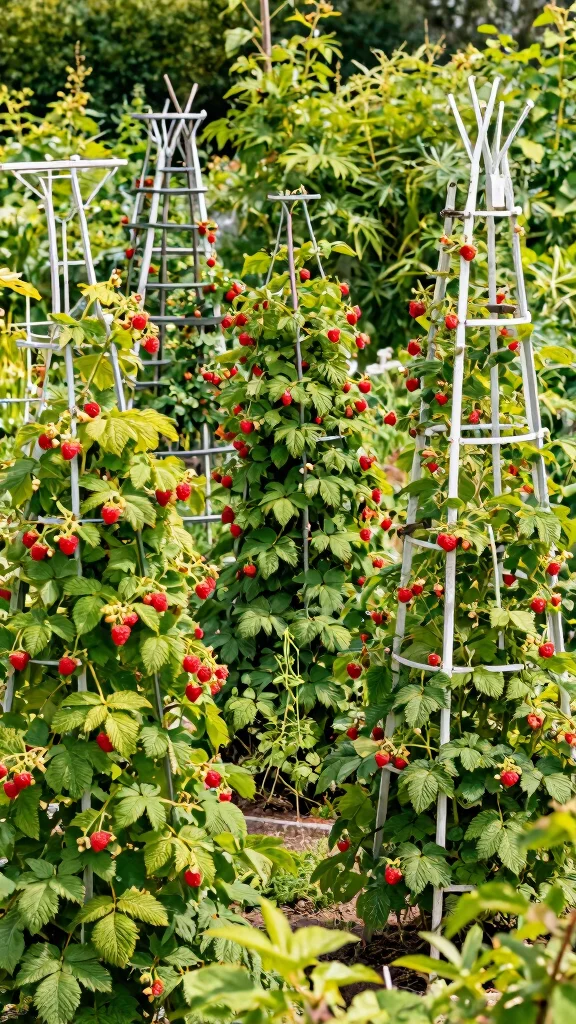
4. Teepee Trellis
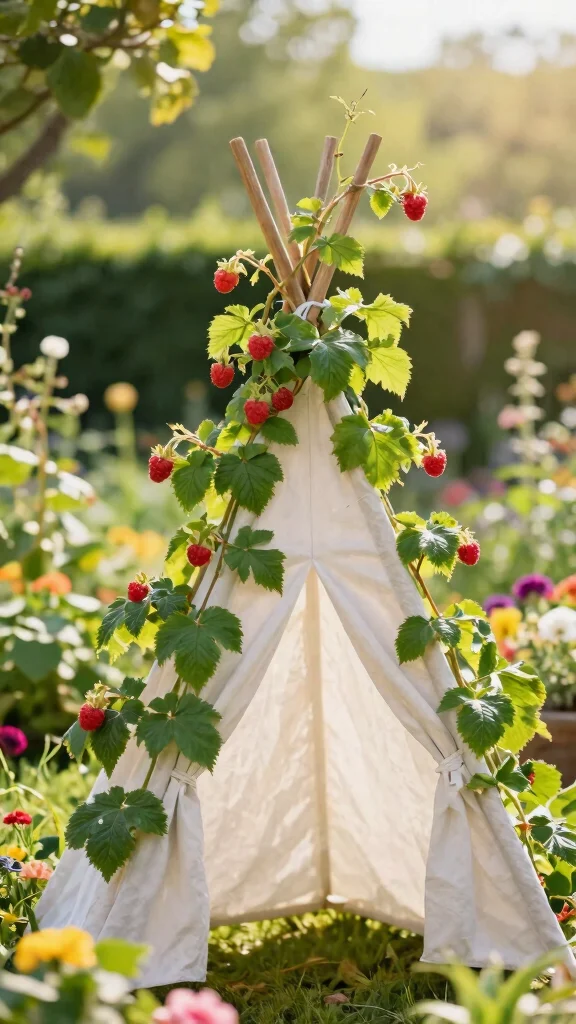
For a delightful and unique approach, try a teepee trellis. This playful design not only supports your raspberry canes but also adds a whimsical touch to your garden. It’s a creative way to keep your plants organized while creating a charming focal point.
Simply gather three or more long stakes and arrange them into a teepee shape, securing them at the top. Train your canes to climb up as they grow, ensuring they receive plenty of sunlight.
Benefits:
– Fun and eye-catching design
– Maximizes vertical space
– Provides ample sunlight exposure
Tips:
– Use tall stakes for easy berry access
– Select flexible canes for easier training
– Incorporate flowering vines for extra beauty
Fun fact: one of the raspberry trellis ideas is a teepee trellis using just three long stakes, forming a sturdy 360-degree framework for raspberry canes. Train the canes as they grow and you’ll harvest with sunnier access and less bending every season.
Key Trade-offs & Our Top Pick
Option Comparison
Classic A-Frame Trellis
– Pros:
– Simple design and easy to build.
– Offers good support for tall raspberry canes.
– Allows for maximum sunlight exposure to the plants.
– Cons:
– Requires more space than some other designs.
– Can be less stable in strong winds.
– May need regular maintenance to ensure its durability.
– Best for: Gardeners with ample space looking for a straightforward and effective support system.
Wire Trellis System
– Pros:
– Highly customizable with adjustable wire heights.
– Durable and strong, able to support many plants.
– Easy to harvest because canes are clearly visible.
– Cons:
– Initial setup can be time-consuming.
– Requires some knowledge of tensioning the wires correctly.
– Can be prone to rust if not made from stainless steel or coated wire.
– Best for: Those who want a long-lasting and flexible trellis system for various plant heights.
Teepee Trellis
– Pros:
– Compact design suitable for smaller gardens.
– Provides a unique and attractive look.
– Easy to assemble with minimal materials.
– Cons:
– Limited support as canes grow taller.
– May require additional stabilization.
– Not ideal for very vigorous raspberry varieties.
– Best for: Gardeners with limited space looking for a decorative element in their garden.
Cattle Panel Trellis
– Pros:
– Extremely sturdy and long-lasting.
– Provides a large area for canes to grow.
– Multipurpose; can be used for other climbing plants too.
– Cons:
– Heavier and more difficult to move.
– Can be more expensive upfront.
– Requires a solid base for installation.
– Best for: Experienced gardeners wanting a robust structure for heavy crops.
Wall-Mounted Trellis
– Pros:
– Saves space by utilizing vertical wall space.
– Easy access to berries for harvesting.
– Can be visually appealing when designed well.
– Cons:
– Limited growing space for the roots.
– Not suitable for all wall types or garden layouts.
– Can be difficult to install without proper tools.
– Best for: Urban gardeners with limited ground space looking to maximize vertical growth.
Expert Recommendation:
Best Overall: Wire Trellis System
For most gardeners, the wire trellis system stands out as the top choice. It offers great value for money while being easy to use and versatile enough to accommodate varying plant heights. With its strength and long-term durability, this system can handle the weight of raspberries as they grow, ensuring that your harvest remains easy to reach.
Why We Picked This:
While the wire trellis system is our top pick, some may prefer the classic A-frame for its simplicity or the teepee for its aesthetics in smaller spaces. Each option has distinct advantages, so consider your garden size, budget, and personal style when making a decision.
5. Pallet Trellis
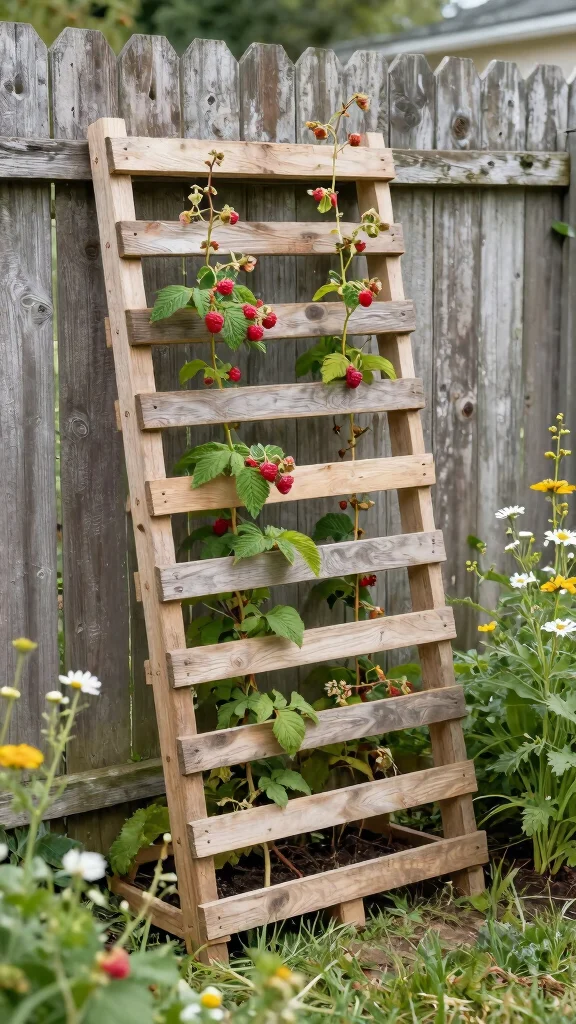
Give your garden a rustic flair with a pallet trellis. Repurposing an old wooden pallet into a support structure for your raspberries combines sustainability with style. It’s an eco-friendly choice that adds character to your outdoor space.
Lean the pallet against a wall or fence, and plant your raspberries at the base. As they grow, they’ll weave through the slats, creating a lovely display that saves space while looking charming.
Benefits:
– Environmentally friendly option
– Affordable and easy to find materials
– Adds rustic charm to your garden
Tips:
– Sand down the pallet to avoid splinters
– Ensure it’s treated for outdoor use
– Position it near a wall for added support
6. Cattle Panel Trellis
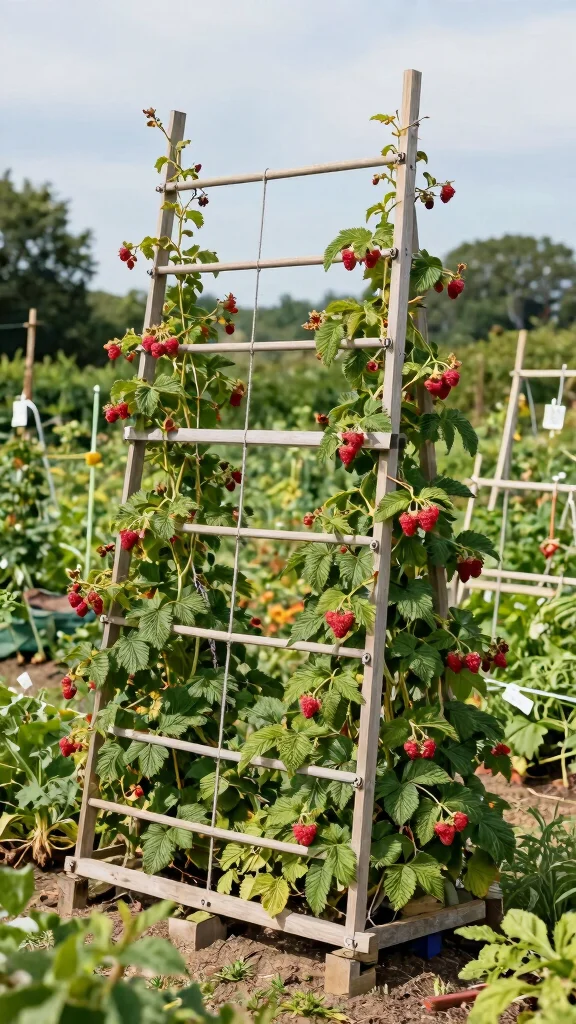
Cattle panel trellises are a robust choice for supporting raspberry plants, especially in larger gardens. These strong panels can withstand vigorous growth and provide excellent support for your fruiting canes. Plus, they make berry picking a breeze!
Set the panel upright and secure it with posts. The grid pattern allows multiple canes to be trained upwards, maximizing vertical space and improving airflow for healthy fruit development.
Benefits:
– Extremely durable for heavy growth
– Perfect for larger outdoor areas
– Supports excellent airflow
Tips:
– Check local regulations regarding material use
– Ensure the structure is well-anchored
– Position in a sunny area for optimal growth
7. Roll-Up Trellis
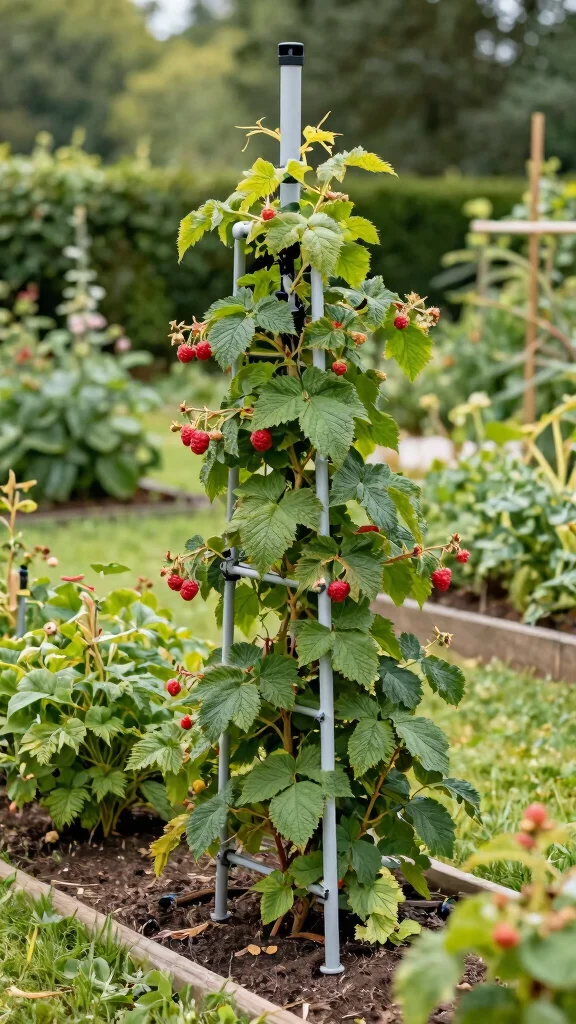
Love flexibility in your gardening? A roll-up trellis might be just what you need. This innovative design allows you to adjust the height of your trellis as your raspberry canes grow, adapting to their changing needs.
When the canes reach the desired height, simply roll up the trellis for continuous support. This is perfect for busy gardeners who appreciate manageable solutions.
Benefits:
– Adjustable height for growing canes
– Great for gardeners on the go
– Keeps your plants organized throughout the season
Tips:
– Use lightweight, sturdy materials for easy rolling
– Ensure the mechanism is simple to operate
– Keep the area around the trellis clear for easy access
Fun fact: among raspberry trellis ideas, a roll-up trellis can cut daily maintenance by up to 40% as canes grow. Adjust height once, then roll up for harvest—keeping berries within reach and your pruning simple all season long.
8. Decorative Arched Trellis
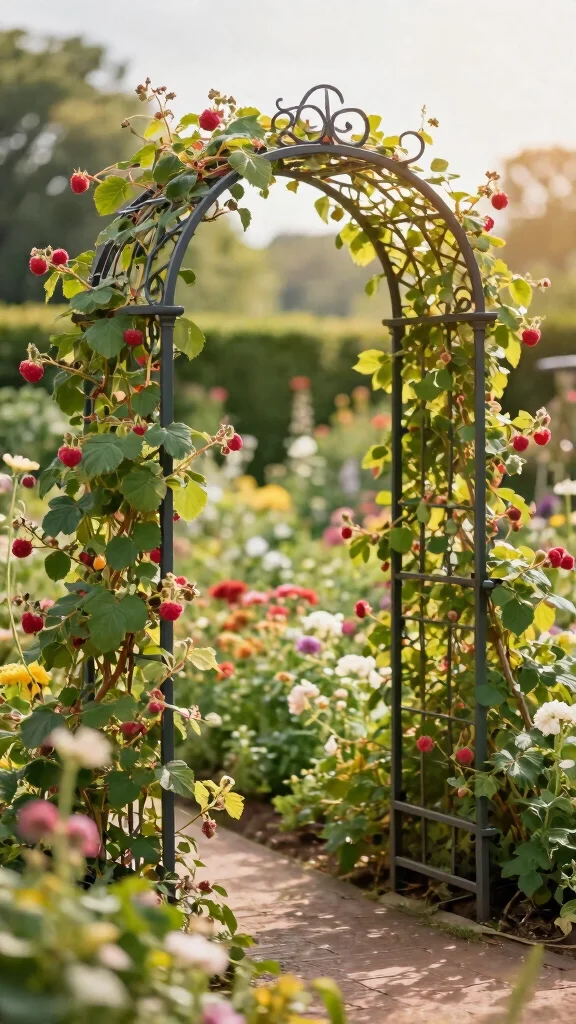
Elevate your garden’s beauty with a decorative arched trellis. This elegant structure not only supports your raspberry canes but also acts as a stunning focal point. Made from metal or wood, it can be adorned with climbing plants or string lights for a magical garden atmosphere.
Easily train your raspberries along the sides for organization and accessibility. This trellis enhances both the functionality and aesthetics of your outdoor space.
Benefits:
– Boosts garden aesthetics
– Provides strong support for canes
– Makes a captivating centerpiece
Tips:
– Choose weather-resistant materials
– Use soft ties when training canes to prevent damage
– Incorporate flowers for added charm
9. Horizontal Ladder Trellis
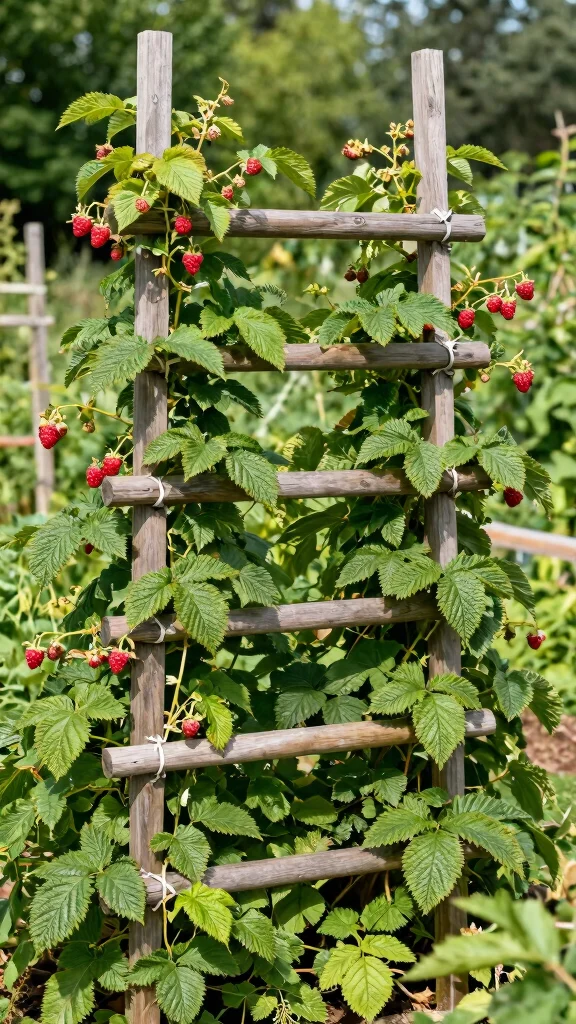
Looking for a creative way to train your raspberry plants? The horizontal ladder trellis is an excellent choice. This design features two vertical posts connected by horizontal rungs, resembling a ladder, providing a unique training method.
As your canes grow, easily tie them to the rungs for organization and easy harvesting. This approach improves airflow and sunlight exposure, both essential for producing juicy berries.
Benefits:
– Innovative use of space
– Supports heavier canes effectively
– Simplifies harvesting
Tips:
– Use strong materials for durability
– Secure rungs tightly to prevent wobbling
– Position in a sunlit area for optimal growth
10. Wall-Mounted Trellis
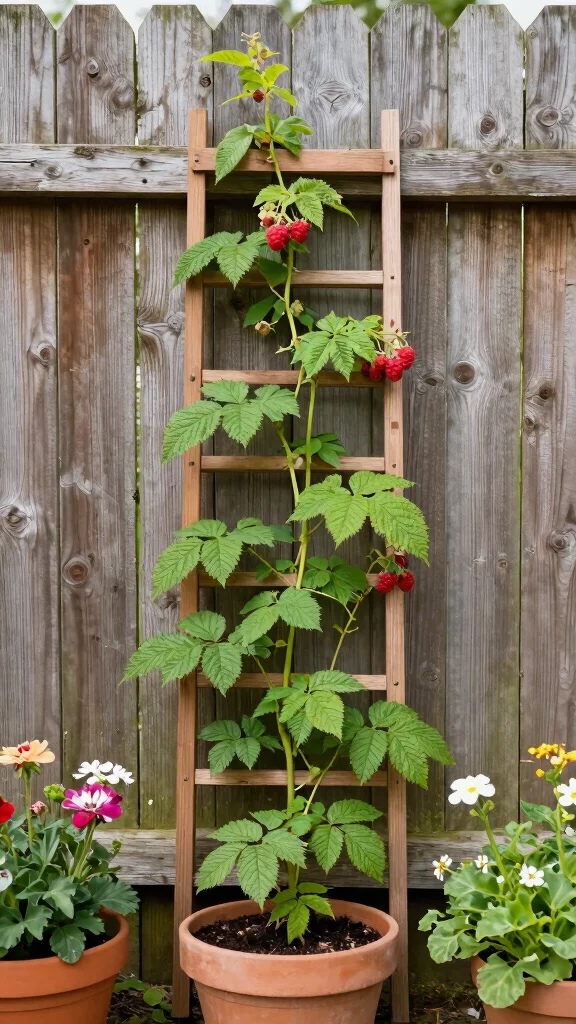
Want to make the most of your vertical space? A wall-mounted trellis is the perfect solution for gardens with limited ground area. This option allows your raspberry canes to climb up a wall or fence, keeping your garden organized and stylish.
By installing a sturdy trellis directly onto a wall, you can enjoy easy access to your berries while enhancing your garden’s design. It’s a smart way to integrate functionality with aesthetics.
Benefits:
– Ideal for small gardens
– Conserves ground space
– Adds a decorative element to your space
Tips:
– Make sure the wall is sturdy enough to support the trellis
– Apply a protective coating to prevent rust on metal
– Pair with companion plants for added visual appeal
Fun fact: A wall-mounted raspberry trellis can free up to 60% of ground space while keeping canes tidy and easy to harvest. With sturdy mounting and proper spacing, those raspberry trellis ideas transform a tiny garden into a high-yield, organized harvest haven.
Conclusion
Finding the right trellis for your raspberry plants can lead to a more organized garden and a bountiful harvest. Experimenting with different designs can not only enhance the structure of your garden but also its visual appeal.
Whether you opt for a classic design or something modern and unique, each trellis idea helps keep your raspberries thriving. Happy gardening, and may your raspberry harvest be plentiful!
Note: We aim to provide accurate product links, but some may occasionally expire or become unavailable. If this happens, please search directly on Amazon for the product or a suitable alternative.
This post contains Amazon affiliate links, meaning we may earn a small commission if you purchase through our links, at no extra cost to you.
Frequently Asked Questions
What are the best raspberry trellis ideas for a compact garden?
For a compact garden, here are raspberry trellis ideas that save space and keep canes easy to reach. Try these setups: 1) a simple two-wire ‘T-bar’ trellis; 2) a vertical string system using eye bolts and sturdy twine; 3) a small cattle-panel frame shaped into a rectangle; 4) an espalier along a wall or fence. How to set them up: choose sturdy posts and set them 4–6 feet apart; run a top wire about 5–6 feet high and a lower wire 18–24 inches below it; tension with turnbuckles; train canes to the wires as they grow. Maintenance tips: prune each year to 6–8 productive canes per plant and tie new growth to the wires; keep fruit at a comfortable picking height. Benefits: improved air flow, less disease risk, and harvests that are easy to reach.
How can I manage raspberry canes to keep the harvest within reach?
Keep the harvest within reach with a simple fruit cane management plan. After fruiting, remove weak or crossing canes and cut back to 4–6 strong canes per plant. Train 2–4 fruiting canes along the trellis at a comfortable height, spacing them 6–8 inches apart along the wire. Tie canes with soft ties every 12–18 inches and avoid squeezing them. Each season, select new primocanes to replace older wood and remove canes that are 2–3 years old to maintain good air flow and prevent disease. Regularly check the trellis for loose wires and repair as needed, so you can harvest with minimal bending.
What materials work best for a durable raspberry trellis and easy maintenance?
Durable raspberry plant support comes from weatherproof materials. Use sturdy posts (pressure-treated wood or steel), galvanized or stainless steel wires, and reliable fasteners. A common setup is two vertical posts with a top wire and a second wire about 18–24 inches below. Choose corrosion-resistant hardware, and keep soil away from the bottom of posts to prevent rot. Plan to re-tension or replace wire every couple of seasons and inspect the trellis in winter storms. This aligns with solid trellis design ideas and reduces maintenance over time.
What are practical garden organization tips when setting up vertical raspberry gardens?
Effective garden organization tips help you squeeze every inch of space for vertical raspberry gardens. Start with a simple layout and mark trellis lines on the ground so you know where rows will run. Keep tools nearby in a labeled container or pegboard, and install a drip irrigation line along the trellis for consistent watering. Mulch between canes to suppress weeds, and use a dedicated harvest basket at arm’s reach. If you grow multiple varieties, label each row and rotate seasons to maintain soil health. All these steps are part of practical vertical gardening techniques for raspberries.
How do I prune and train raspberry canes on a trellis for maximum yield?
Pruning and training are key for maximum yield. Raspberries fruit on last year’s canes, so start by removing dead or diseased wood and canes that bore fruit. Leave 4–6 healthy canes per plant as permanent fruiting canes and cut back the tips of new primocanes to encourage branching. On the trellis, tie canes to the wires at the desired height and gradually guide them upward as they grow. Each season, prune to maintain 2–3 buds on future fruiting positions and remove old wood after harvest to make room for new growth. This fruit cane management approach keeps canes organized and yields predictable.
Related Topics
raspberry trellis ideas
vertical gardening
fruit cane management
garden organization
raspberry plant support
trellis design
easy gardening
beginner gardening
DIY trellis
sustainable gardening
seasonal gardening
outdoor gardening