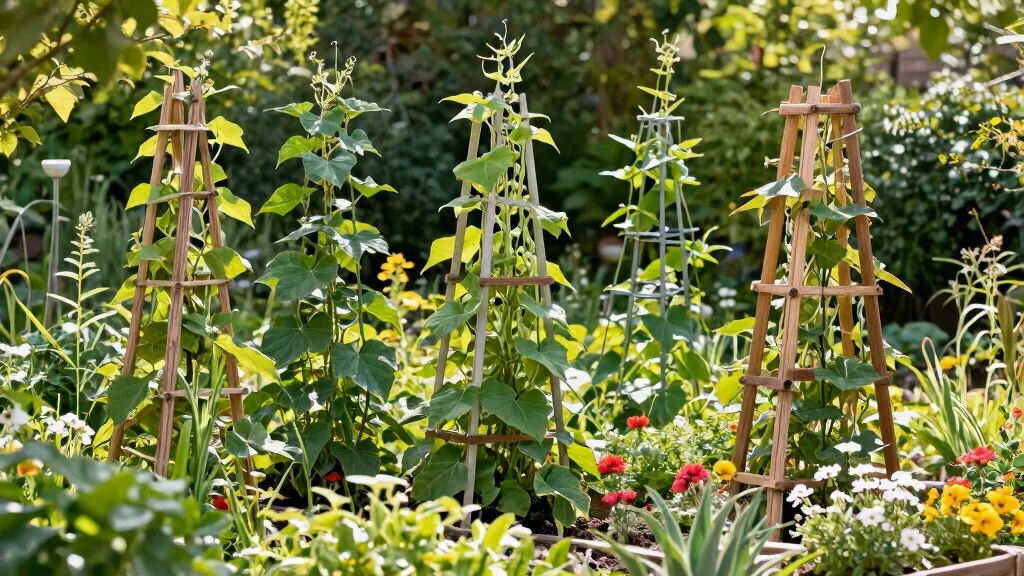
Growing green beans can be a delightful experience, especially when you see those vibrant vines climbing high. However, keeping them organized and upright can sometimes feel like a challenge. This post is here to help! I created this guide to share clever and practical green bean trellis ideas that will not only support your climbing plants but also keep your garden looking neat and tidy.
If you’re someone who loves gardening, especially in smaller spaces, you’re going to find this post very useful. Whether you’re a beginner or an experienced gardener, these trellis designs will suit various styles and preferences. With DIY trellis solutions ranging from classic wooden frames to modern designs, you’ll have everything you need to elevate your vertical gardening game.
By the time you finish reading, you’ll be equipped with 11 creative trellis ideas that will enhance your garden’s organization while ensuring your green beans thrive. Each idea is designed to be functional yet visually appealing, making them perfect for any garden aesthetic. So let’s dig into these inspiring trellis options that can help you grow your green beans with confidence!
Key Takeaways
– Discover 11 diverse green bean trellis ideas that cater to various gardening styles and spaces.
– Learn how trellises can improve garden organization and create a tidy atmosphere, especially in small gardens.
– Explore DIY solutions that allow you to customize your trellis to fit your specific needs and preferences.
– Find out how vertical gardening techniques can help you maximize space while keeping your plants healthy and productive.
– Get inspired by a mix of classic and innovative designs that can enhance both the aesthetics and functionality of your garden.
1. Classic A-Frame Trellis
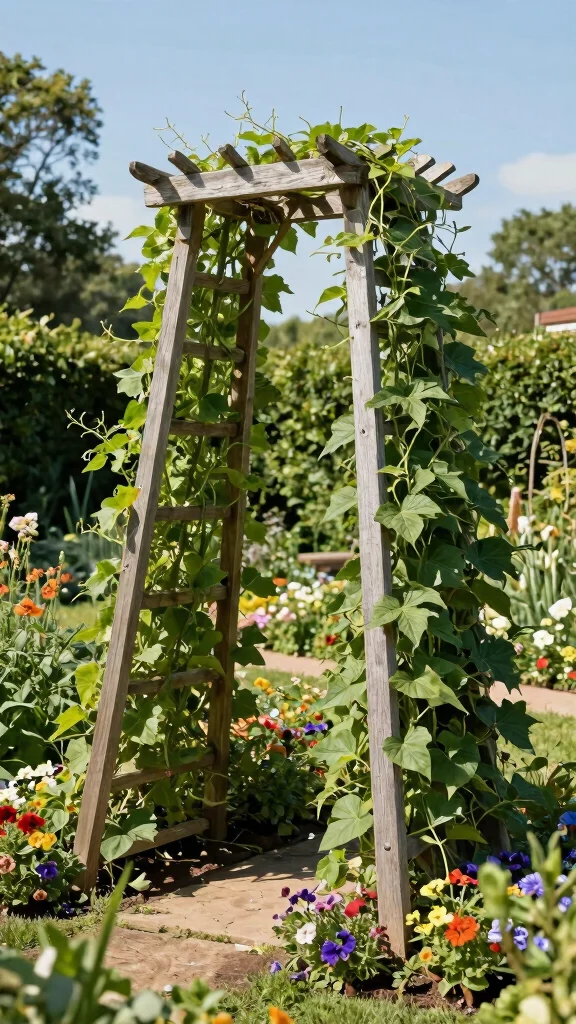
If you’re seeking a simple yet effective way to support your green beans, the A-frame trellis is a classic choice. This design combines functionality with a charming aesthetic, often crafted from durable wood or metal rods. Its triangular shape not only looks appealing but also provides excellent support for climbing plants while enhancing airflow, reducing disease risks in your garden.
Building your own A-frame trellis is easy and requires minimal materials. This structure is perfect for tight spaces, allowing your plants to grow upwards instead of sprawling outwards. You can also enhance the base by planting colorful flowers, creating a lovely garden display.
Key steps for building:
– Use sturdy treated wood for long-lasting support.
– Secure the base firmly in the soil for stability.
– Stain or paint the wood to match your garden theme.
This trellis offers a reliable structure against wind, ensuring your climbing plants stay healthy and upright. You’ll enjoy the beauty and functionality of this design for many gardening seasons to come.
DIY Instructions:
1. Cut two long wood pieces for the sides and one shorter piece for the base.
2. Form a triangle and securely nail or screw the joints.
3. Plant beans at the base and guide them as they grow upward.
Challenges: Monitor for pests that may hide in the foliage.
2. Vertical Garden Wall Trellis
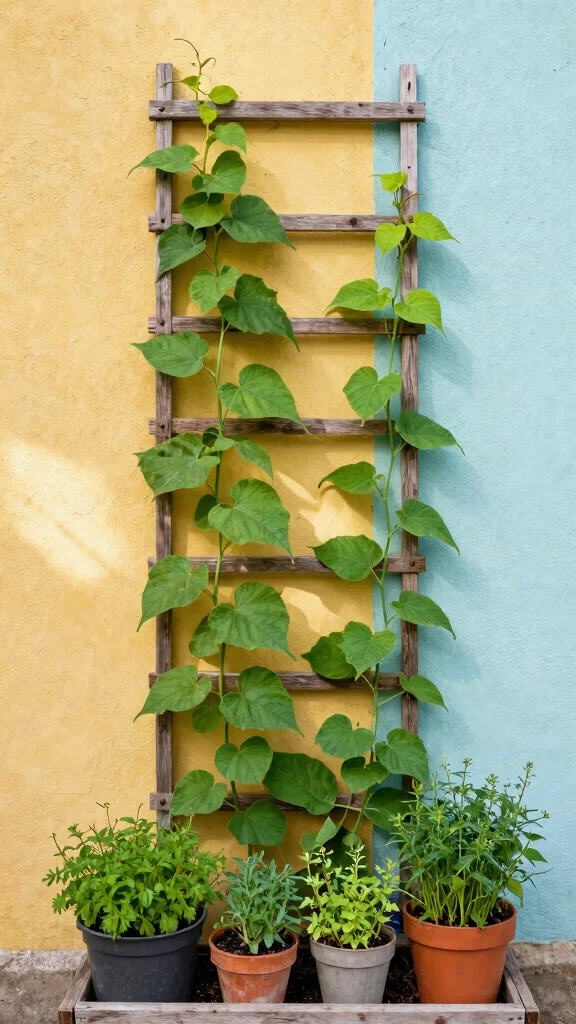
Struggling with limited garden space? A vertical garden wall trellis could be your perfect solution. By attaching a trellis to a wall or fence, you create a vertical growing area that maximizes your garden’s potential. This approach not only saves valuable space but also enhances the visual appeal of your outdoor area.
Choose a design that fits your style, whether it’s sleek and modern or rustic with reclaimed wood. You can even add a splash of color by painting the wall, making it a stunning backdrop. As your beans grow, consider placing small herb pots at the base for a tidy and organized look.
Building Tips:
– Confirm the wall’s ability to support plant weight.
– Use strong brackets to securely attach the trellis.
– Opt for lightweight materials like fabric or wire mesh.
This design promotes excellent sunlight exposure while ensuring your garden remains neat and manageable. The result is a beautiful, functional space that thrives throughout the season.
DIY Instructions:
1. Measure the available wall space.
2. Cut your trellis materials to fit.
3. Securely mount the trellis to the wall using brackets.
4. Plant beans at the base and guide them as they grow.
Challenges: Monitor watering closely, as wall-mounted plants may dry out quickly.
3. Decorative Trellis Panels
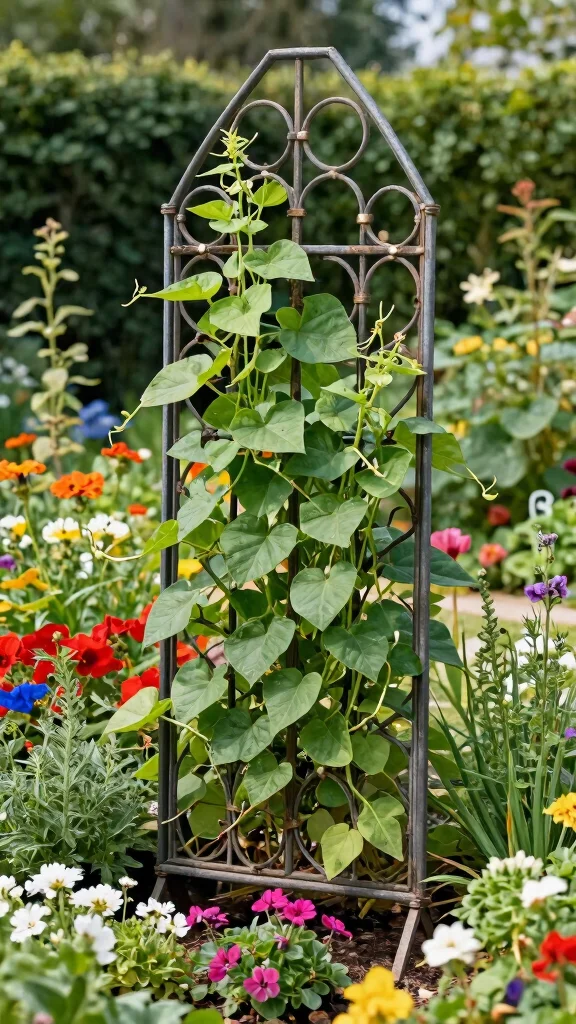
Elevate your garden’s style with decorative trellis panels that serve both form and function. These panels can be custom-built or purchased in a variety of materials, like wrought iron or wood, allowing you to showcase your personal style. Placing these panels around your garden creates a stunning framework for climbing beans and adds visual interest to your outdoor space.
As your beans ascend the decorative trellis, they enhance the overall aesthetics of your garden. Additionally, these panels can act as dividers, providing a chic and organized appearance. A well-placed panel can transform a simple garden into an eye-catching landscape.
Building Tips:
– Select materials that blend with your garden’s style.
– Ensure the trellis is tall enough for mature plants.
– Incorporate lattice designs for additional flair.
The right trellis panel can act as a focal point, enhancing the beauty of your garden while supporting your climbing plants.
DIY Instructions:
1. Decide on the size and location for your decorative panel.
2. Cut materials to size or purchase ready-made options.
3. Securely mount the panel in your chosen spot.
4. Plant beans at the base and guide them as they grow.
Challenges: Regularly check for stability and rust, particularly in wet climates.
4. Bamboo Pole Trellis
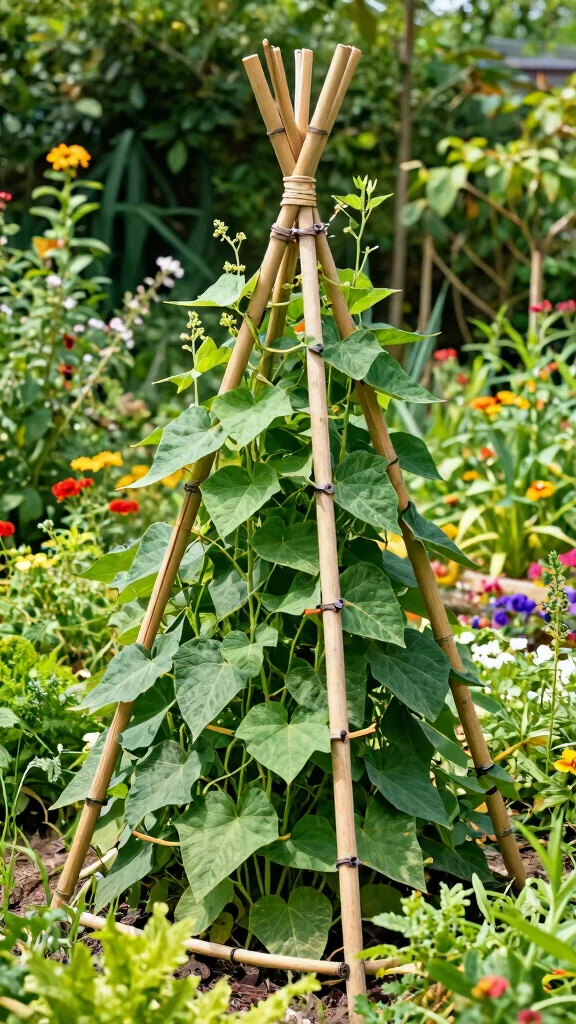
If you’re looking for a quick and eco-friendly way to support your climbing plants, consider a bamboo pole trellis. Bamboo is lightweight, sustainable, and easy to work with, making it an ideal choice for gardeners of all levels. Simply gather a few bamboo poles and tie them in a teepee formation to create a natural climbing structure for your green beans.
This trellis not only supports your plants but also adds an organic touch to your garden. Plus, it’s an affordable option that doesn’t compromise on aesthetics. As your beans climb, they create a lush green display that enhances your gardening space.
Building Tips:
– Secure bamboo poles together with durable string or twine.
– Ensure the structure is tall enough for optimal bean growth.
– Space poles adequately to allow for plant expansion.
Bamboo’s natural resistance to rot makes it a great choice for outdoor use, ensuring your trellis lasts season after season.
DIY Instructions:
1. Gather several bamboo poles of varying heights.
2. Tie them together at the top with string.
3. Firmly secure the base in the ground.
4. Plant beans at the base and let them climb.
Challenges: Regularly check the stability of the structure during windy conditions.
For green bean trellis ideas that actually work, keep it simple. A few bamboo poles in a teepee form are lightweight, affordable, and easy to re-stack—perfect for quick, tidy harvests.
5. Reclaimed Wood Trellis
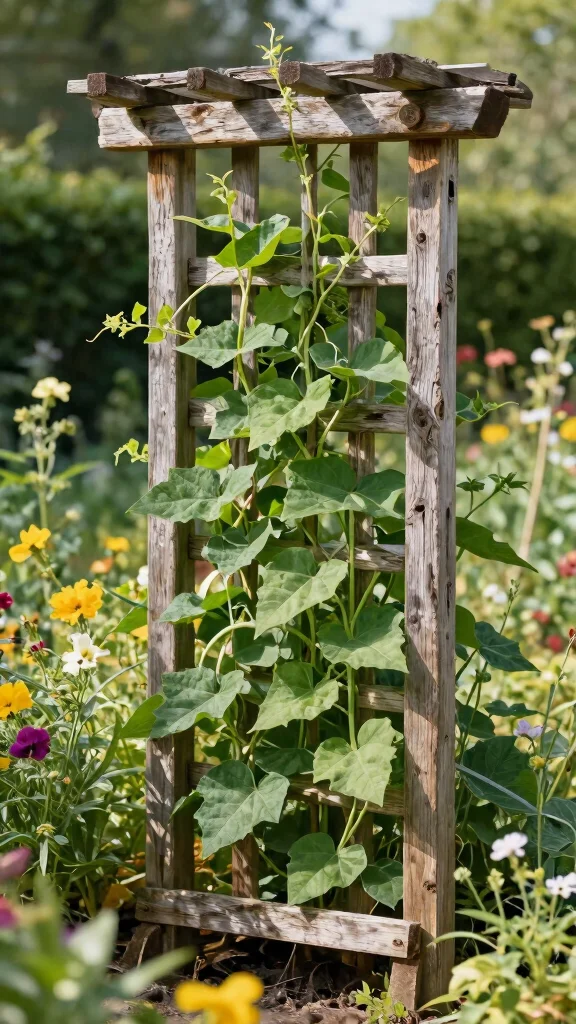
For a sustainable and unique gardening solution, consider creating a trellis from reclaimed wood. This option not only provides robust support for your climbing beans but also adds rustic charm to your outdoor space. By repurposing materials, you contribute to environmental sustainability while crafting a distinctive garden feature.
You can design your trellis in various ways, from simple vertical supports to intricate patterns that mimic fences. The natural weathered finish of reclaimed wood adds warmth and character, making your garden inviting. Pairing climbing flowers with your beans can further enhance the visual appeal.
Building Tips:
– Check reclaimed wood for rot or damage before using.
– Mix different wood types for an eclectic appearance.
– Sand down rough edges to prevent splinters.
The character of reclaimed wood creates a unique story in your garden, setting it apart from typical trellis designs.
DIY Instructions:
1. Collect various pieces of reclaimed wood.
2. Cut to the desired lengths and arrange in a trellis shape.
3. Secure pieces together with wire or screws.
4. Plant beans at the base and allow them to climb naturally.
Challenges: Sourcing quality reclaimed wood may require some effort.
6. Wire Mesh Trellis
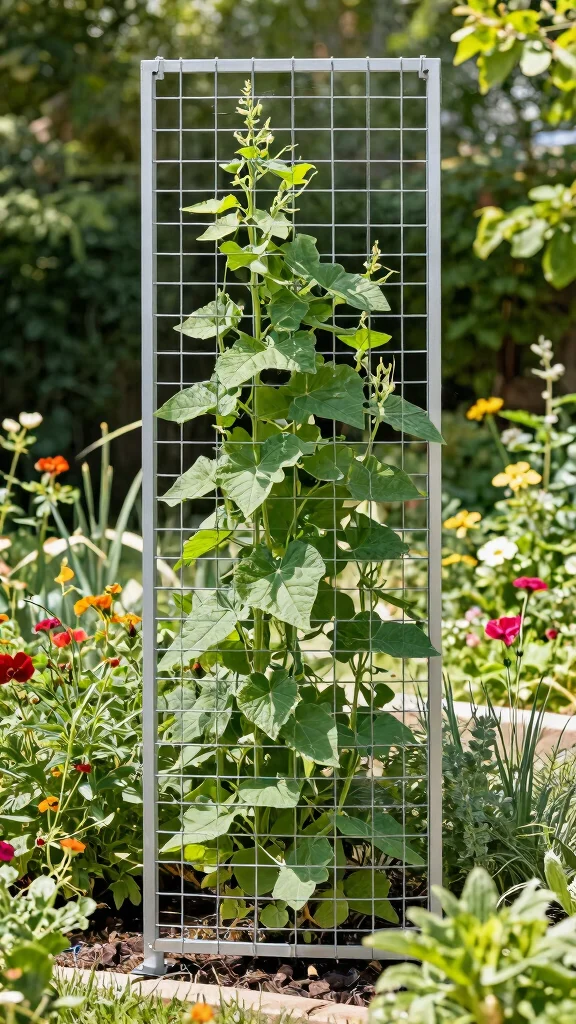
For modern gardeners, wire mesh trellises offer an excellent solution for vertical gardening, especially in tight spaces. These sturdy frameworks provide ample support for your green beans and can be easily customized to fit your garden’s layout. Attaching wire mesh to a wall or frame lets your beans grow naturally while ensuring they receive plenty of sunlight.
This option is highly versatile, as you can select different wire types to match your aesthetic, from sleek metal to rustic chicken wire. Additionally, wire mesh can double as a fence or partition, enhancing functionality in your garden.
Building Tips:
– Use strong, rust-resistant wire mesh for durability.
– Ensure it is securely fastened to withstand wind and plant weight.
– Customize the height to suit your garden needs.
Wire mesh allows maximum sunlight exposure, promoting vibrant growth for your climbing beans.
DIY Instructions:
1. Measure and cut your wire mesh to the desired dimensions.
2. Secure the mesh against a wall or fence using nails or screws.
3. Plant beans at the base and guide them to climb the mesh.
Challenges: Regularly inspect the mesh for any breaks or bends as the plants grow.
Fun fact: A 6-foot wire mesh trellis can support 20–25 lush green bean plants in a small space. With the beans growing upright, you can harvest more in less time—truly one of the simplest green bean trellis ideas for tidy, sunlit gardens.
7. Garden Arch Trellis

Add a touch of elegance to your outdoor space with a garden arch trellis. This stunning structure not only supports climbing green beans but also serves as a beautiful entryway or focal point in your garden. Available in various materials like metal or wood, arched trellises create a captivating atmosphere as your beans cascade over their sides.
This design works especially well in larger gardens, providing a dramatic backdrop for your plants. Pair it with flowering vines for a breathtaking combination that will surely impress your guests.
Building Tips:
– Choose materials that enhance your garden’s aesthetic, such as wrought iron for a classic touch.
– Ensure robust anchoring for stability against the elements.
– Decorate the arch with fairy lights for an enchanting evening ambiance.
The arch shape not only looks beautiful but also provides shade, creating cooler conditions for the plants beneath.
DIY Instructions:
1. Select your material (wood or metal) and cut to form the desired arch shape.
2. Assemble the arch and secure it firmly in the ground.
3. Plant beans at the base and guide them to climb the arch.
Challenges: The size and weight of the arch may require additional support during windy conditions.
8. PVC Pipe Trellis
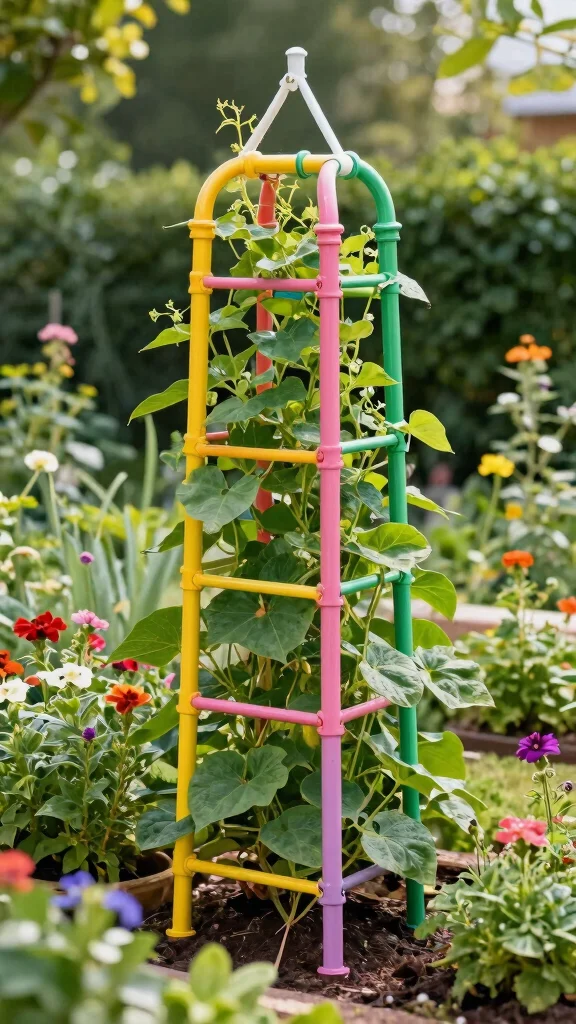
For a durable and budget-friendly option, creating a trellis from PVC pipes is a fantastic idea. This material is incredibly versatile, easy to cut, and can be fashioned into any size you need for your garden. Constructing a PVC pipe trellis is a straightforward process, allowing you to build a frame that fits perfectly in your space.
Its lightweight nature makes moving the trellis around a breeze, and you can paint the pipes to coordinate with your garden’s theme, adding a stylish touch. This trellis is especially beneficial for supporting young plants as they begin to grow.
Building Tips:
– Use connectors to create sturdy joints and right angles.
– Apply weather-resistant spray paint for a polished look.
– Secure the base well in the ground to prevent tipping.
PVC pipes are capable of withstanding various weather conditions, ensuring your trellis lasts throughout the gardening season.
DIY Instructions:
1. Measure your space to determine the size of the trellis.
2. Cut PVC pipes to desired lengths and assemble using connectors.
3. Secure the structure into the ground.
4. Plant beans at the base and guide them up the trellis.
Challenges: Regular maintenance may be needed to keep connections secure as plants grow.
Did you know that for green bean trellis ideas, a DIY PVC trellis costs as little as $15 and can support over 20 pounds of green beans? Its lightweight, easy-to-cut design can be sized to fit any space, then painted to match your garden theme.
Key Trade-offs & Our Top Pick
1. Classic A-Frame Trellis
– Pros: ✔ Simple to build, ✔ Works great for climbing plants, ✔ Offers good support.
– Cons: ⏱ Takes up more ground space, ⏱ May need regular maintenance, ⏱ Not as decorative.
– Best for: Gardeners looking for a straightforward and functional solution for small spaces.
2. Vertical Garden Wall Trellis
– Pros: ✔ Maximizes vertical space, ✔ Can be very decorative, ✔ Perfect for small gardens.
– Cons: ⏱ May require wall installation, ⏱ Can be expensive depending on materials, ⏱ Less stable for very tall plants.
– Best for: Those with limited garden space wanting a stylish and efficient option.
3. Bamboo Pole Trellis
– Pros: ✔ Eco-friendly material, ✔ Lightweight and easy to move, ✔ Inexpensive and easy to find.
– Cons: ⏱ Less durable than some other options, ⏱ May require more frequent replacement, ⏱ Less stable in strong winds.
– Best for: DIY enthusiasts looking for a budget-friendly and natural aesthetic.
4. Reclaimed Wood Trellis
– Pros: ✔ Unique and rustic look, ✔ Environmentally friendly, ✔ Durable and sturdy if well-maintained.
– Cons: ⏱ May require more effort to build, ⏱ Can be heavy, ⏱ Possible splinters and rough edges.
– Best for: Gardeners wanting a stylish, eco-conscious option for climbing plants.
5. Wire Mesh Trellis
– Pros: ✔ Strong support for heavier crops, ✔ Allows for better airflow and sunlight, ✔ Easy to install.
– Cons: ⏱ Can be less visually appealing, ⏱ May rust over time, ⏱ Requires anchoring for stability.
– Best for: Those growing heavy crops like beans and other climbing vegetables.
Expert Recommendation:
Best Overall: Vertical Garden Wall Trellis
This trellis is our top pick for most gardeners. It perfectly combines style and functionality, making it ideal for small spaces. You can easily customize it to fit your décor, while still providing solid support for your green beans. It’s versatile and durable, ensuring you’ll enjoy it for many growing seasons ahead.
Why We Picked This:
If you need something simple, the A-frame might suit you better. For a more rustic look, consider the reclaimed wood trellis. If you’re focused on supporting heavier plants, the wire mesh is a great choice. Choose based on your garden’s needs, space, and personal style!
9. Lattice Panel Trellis
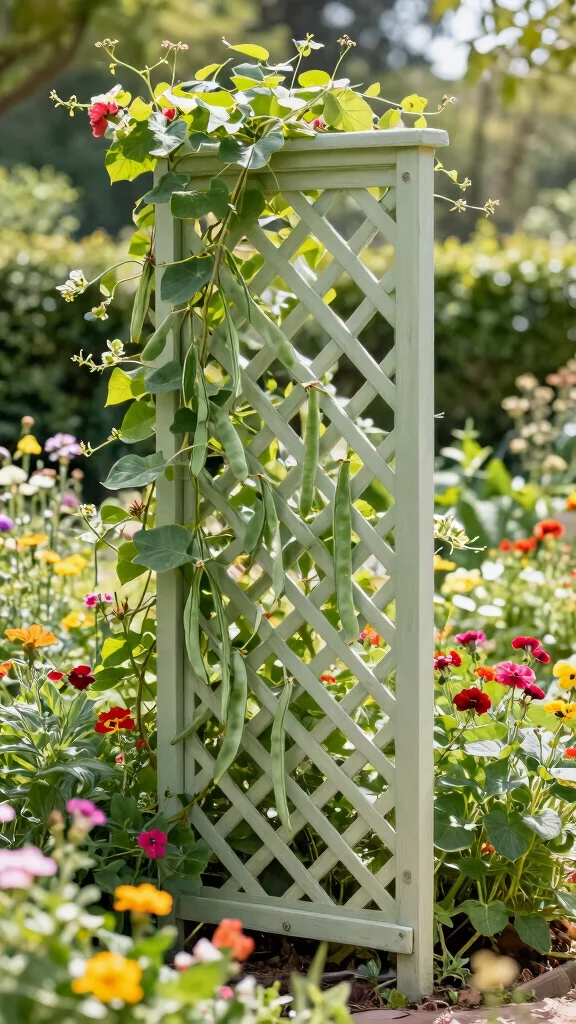
Lattice panels provide a stylish and functional option for supporting climbing beans in your garden. Their classic design offers a structured form for plants to wind around while also serving as privacy screens or decorative backdrops. Available in various materials and styles, lattice panels can beautifully complement your garden aesthetic.
Positioning beans at the base allows them to climb through the lattice gaps, creating a lush, green tapestry. You can personalize the look by adding a coat of stain or paint, making the lattice a focal point in your outdoor area.
Building Tips:
– Select a lattice style that aligns with your garden theme.
– Ensure the lattice is anchored securely for stability.
– Consider planting flowering vines alongside beans for added beauty.
Lattice panels can also work well for other climbing plants, promoting diversity in your garden.
DIY Instructions:
1. Purchase or cut lattice panels to your desired height.
2. Secure the panels in the ground or attach them to a fence.
3. Plant beans at the base and allow them to climb through the lattice.
Challenges: Regularly check to make sure plants don’t get stuck or tangled in the lattice.
10. Folding Trellis
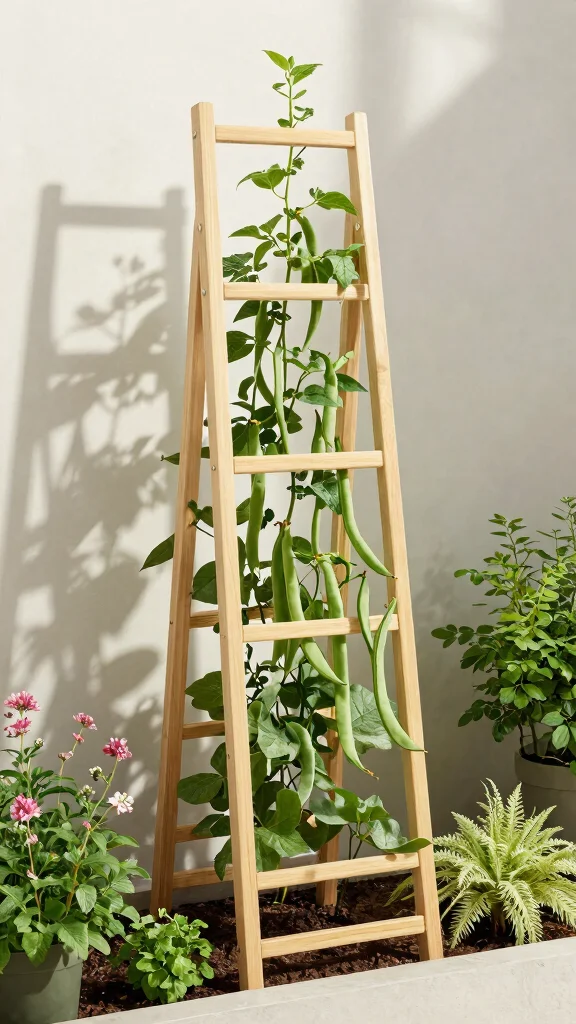
If versatility and space-saving solutions are what you need, a folding trellis is an excellent choice. This type of trellis can be easily opened when needed and folded down when not in use, making it ideal for small patios or balconies. Lightweight and often made from wood or metal, folding trellises provide a quick setup for your climbing beans and can be moved as your garden evolves.
It’s a practical option that combines style with flexibility, perfect for adapting to changing gardening needs throughout the seasons.
Building Tips:
– Ensure the hinges are sturdy for regular use.
– Choose weather-resistant materials for longevity.
– Consider adding a locking mechanism for stability when open.
This design caters to urban gardeners looking to maximize their limited space while maintaining a beautiful garden.
DIY Instructions:
1. Select your materials (wood or metal) and cut them to size.
2. Attach hinges to your frame to allow for folding.
3. Secure the trellis in an upright position.
4. Plant beans at the base and guide them to climb as they grow.
Challenges: Regularly inspect the hinges and locking mechanisms to ensure they remain functional.
11. Pallet Trellis
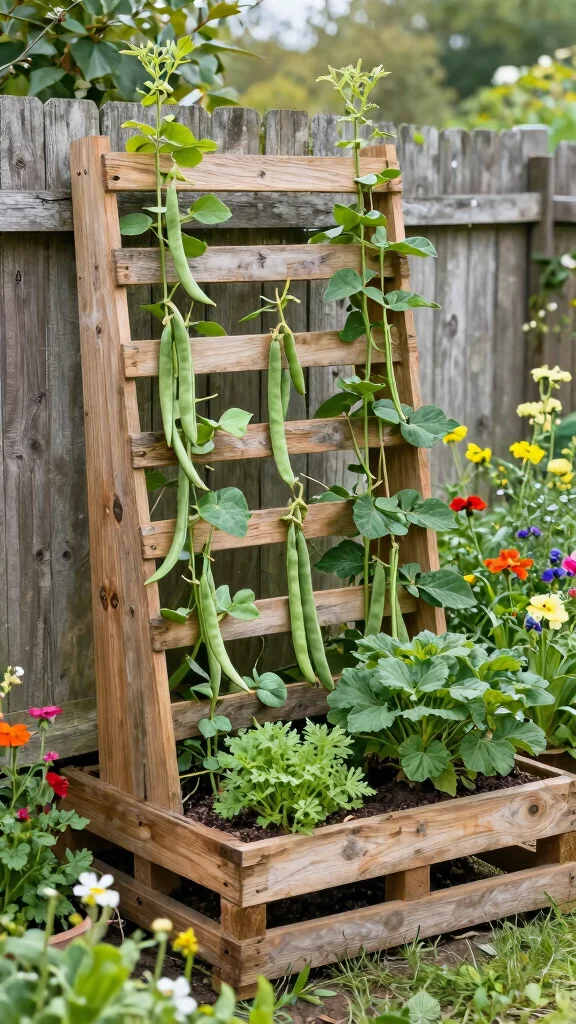
For an eco-friendly and creative gardening solution, a wooden pallet can serve as an innovative trellis. Pallets are often easy to find and can be transformed into a unique support for your climbing green beans. Not only do they provide excellent structure for your plants, but they also make a striking feature in your garden.
Simply secure the pallet vertically or at an angle against a wall or fence, letting the beans climb through the slats. You can paint or stain the pallet to match your garden or keep it rustic for a farmhouse feel. Pairing it with other plants creates an enticing layered look.
Building Tips:
– Choose sturdy pallets free from cracks or damage.
– Secure the pallet well to withstand wind and plant weight.
– Consider planting herbs or flowers at the base for a colorful display.
Using pallets not only saves money but also supports recycling and repurposing in your gardening practices.
DIY Instructions:
1. Find a clean, sturdy wooden pallet.
2. Secure it in an upright position against a wall or fence.
3. Plant beans at the base and guide them through the pallet openings.
Challenges: Regularly check for splinters or worn areas that could hinder plant growth.
Conclusion
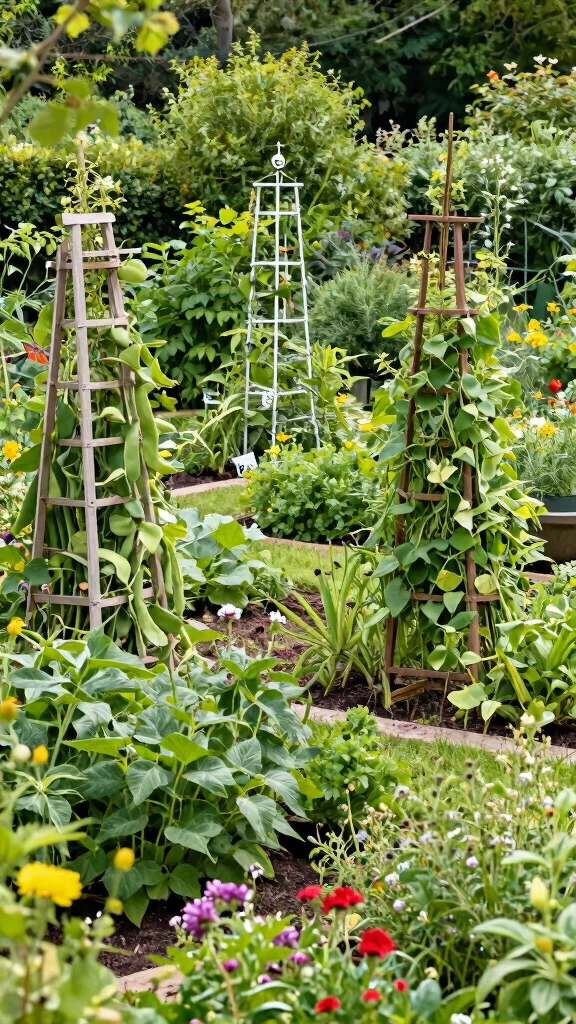
Whether you’re a seasoned gardener or just starting, these green bean trellis ideas offer a variety of options to keep your plants upright and your garden looking neat.
From classic designs to modern solutions, the right trellis can add both functionality and beauty to your outdoor space. Experiment with different styles to find what suits your taste and available space. Embrace the beauty of vertical gardening and enjoy a flourishing garden filled with vibrant green beans!
Note: We aim to provide accurate product links, but some may occasionally expire or become unavailable. If this happens, please search directly on Amazon for the product or a suitable alternative.
This post contains Amazon affiliate links, meaning we may earn a small commission if you purchase through our links, at no extra cost to you.
Frequently Asked Questions
What are the best green bean trellis ideas for small-space gardens?
For green bean trellis ideas that fit tight spaces, go vertical. Options like a simple teepee or cone from stakes and twine, a ladder or A-frame, a repurposed fence panel, a cattle-panel arch, or a grid of welded wire attached to posts all work well. These setups support climbing beans, keep pods off the ground, and make vertical gardening and garden organization easier in small beds. Pick materials that suit your climate and space, and adjust height as your beans grow.
What materials are best for a DIY green bean trellis?
For DIY trellis solutions, choose durable, affordable materials: cedar or pressure-treated wood, galvanized steel or aluminum, sturdy PVC frames, heavy-duty garden twine, or 14–16 gauge wire. Avoid rope that stretches or rots. Build a tall, narrow frame that can be anchored to the ground or a fence, and secure with sturdy fasteners. This keeps your trellis designs stable for full-season bean growth and supports long-term garden organization.
How do I install a vertical trellis in a small garden without taking up too much space?
Start by measuring the space you have and choosing a design that hugs a boundary—along a fence, the edge of a raised bed, or a tall slender frame. Secure posts at the ends, attach lattice panels, welded wire, or a cattle-panel arch, and anchor well. Plant beans at the base and gently guide vines with soft ties as they grow. This setup minimizes ground footprint, supports vertical gardening, and helps keep your garden organization tidy.
How do I train green beans to climb and protect the trellis?
Plant beans near the base of the trellis when they’re young, then provide gentle support by tying main stems to the structure with soft garden ties or twine. As vines grow, guide new growth upward and avoid over-tightening to prevent damage. Check weekly for loose ties, adjust as needed, and keep beans evenly watered to encourage strong, steady growth on the trellis designs.
In what ways can a neat trellis design improve yield and garden organization in small spaces?
Elevating beans off the soil improves air circulation, reduces disease, and makes harvesting easier. A tidy trellis also frees ground space for herbs or flowers, enhances garden organization, and supports reliable yields from a compact plot. Pair a vertical setup with labeled sections or color-coded stakes to keep everything orderly while still looking great in your garden.
Related Topics
green bean trellis
vertical gardening
climbing plants support
DIY trellis designs
garden organization
small space gardening
easy gardening projects
beginner gardening tips
space-saving solutions
sustainable gardening
trellis ideas