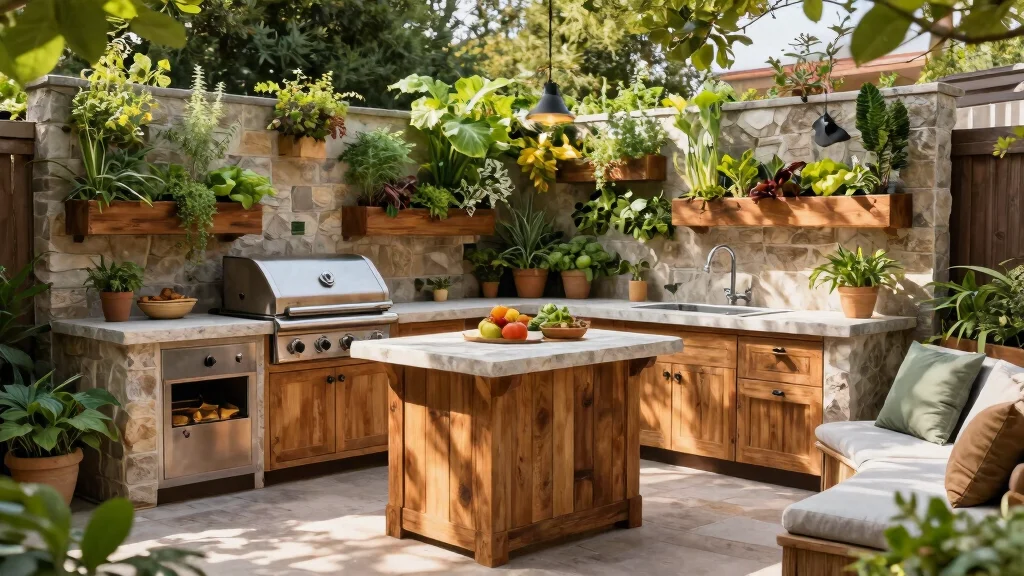
Creating an outdoor kitchen is like opening a door to a new world of culinary adventure. With the beauty of nature at your fingertips, outdoor cooking becomes not just a task, but a delightful experience. I’ve crafted this post because I want to inspire you to transform your backyard into a stylish and functional cooking space. If you dream of hosting summer barbecues or enjoying cozy dinners under the stars, then you’re in the right place.
This post is especially for gardening enthusiasts who care about sustainability. You want an outdoor kitchen that is not only eco-friendly but also seamlessly integrates with your garden. Here, you’ll discover 11 creative L-shaped outdoor kitchen ideas that make cooking outside effortless and enjoyable. Each idea provides a unique perspective on how to maximize your space, keep everything organized, and even incorporate sustainable materials.
Get ready to explore designs that combine practicality with aesthetics, ensuring that your outdoor cooking area is both inviting and functional. From integrating a herb garden to using eco-friendly appliances, these ideas will help you create a space that reflects your values and enhances your outdoor living experience.
Key Takeaways
– Discover how to use sustainable materials to create an outdoor kitchen that blends naturally with your garden environment.
– Learn about integrating a herb and vegetable garden, adding fresh ingredients right at your fingertips while cooking outdoors.
– Find out how an efficient L-shaped layout can maximize your cooking and entertaining space, making gatherings much more enjoyable.
– Explore options for eco-friendly appliances that reduce your carbon footprint while you whip up delicious meals.
– Get tips for incorporating built-in seating and other features to enhance social interaction in your outdoor kitchen area.
1. Sustainable Materials for a Natural Look
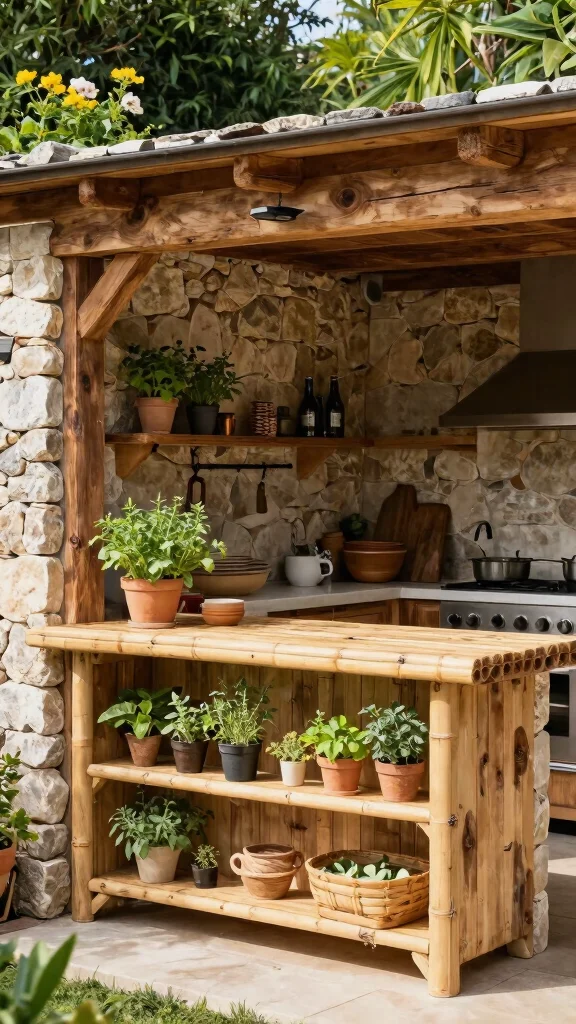
Are you dreaming of an outdoor kitchen that’s both stunning and eco-friendly? Choosing sustainable materials can beautifully fulfill that vision. Opt for reclaimed wood or bamboo for cabinetry and countertops, adding charm while reducing your environmental impact.
Natural stone is another excellent choice, especially when sourced locally. It brings an earthy aesthetic that blends seamlessly with the surrounding landscape. Incorporating recycled metal for accents can add a trendy industrial flair while enhancing durability.
– Reclaimed Wood: Unique and eco-conscious, it tells a story.
– Natural Stone: Timeless and durable, available in countless hues.
– Bamboo: Fast-growing and robust, it’s a planet-friendly option.
By selecting these materials, you create a beautiful space that also respects the environment, perfect for the eco-conscious homeowner.
2. Herb and Vegetable Garden Integration
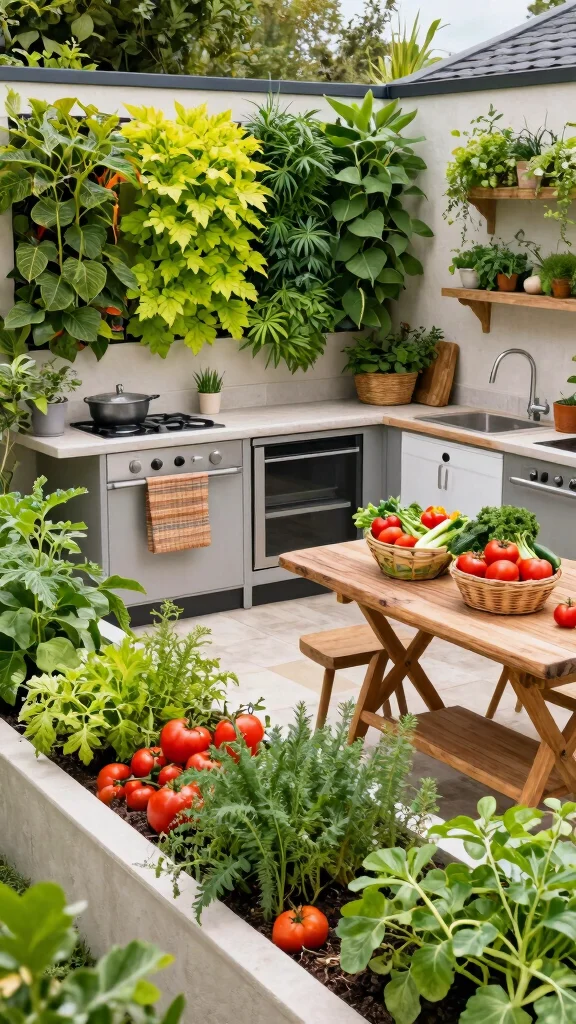
How amazing would it be to step outside your kitchen and pick fresh herbs and vegetables for your dinner? Integrating a small garden into your outdoor kitchen is a delightful way to enhance your cooking experience.
Design raised garden beds right next to your kitchen or use vertical planters on the wall to save space. Not only does this look great, but it also reduces your food miles and promotes sustainability.
– Raised Beds: Fresh ingredients are just steps away.
– Vertical Gardens: Stylish and functional for limited spaces.
– Companion Planting: Grow tomatoes alongside basil for a bountiful harvest.
This integration lets you enjoy the freshest farm-to-table meals right in your own backyard!
Fun fact: Adding 2 raised beds and 3 vertical planters to your l shape outdoor kitchen ideas cuts food miles and boosts flavor. Keep herbs within arm’s reach for effortless cooking and sustainable, eco-friendly gardening.
3. Efficient L-Shaped Layout for Cooking
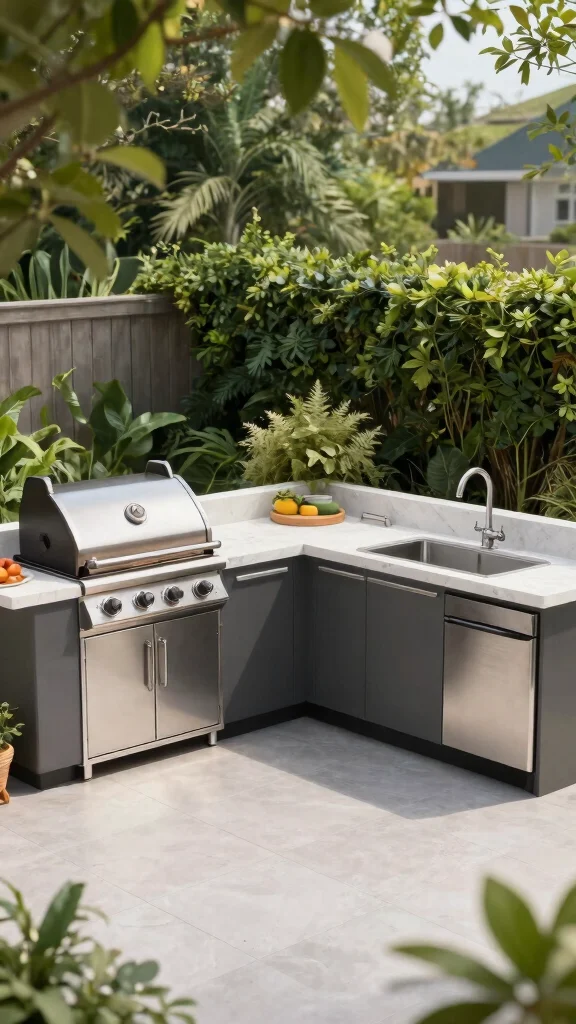
Do you want a cooking setup that maximizes your space and keeps everything within arm’s reach? An efficient L-shaped layout is the answer! This design promotes a smooth workflow, making outdoor cooking enjoyable and stress-free.
Position your grill and cooking station on one end while placing the sink and prep area on the other. This arrangement minimizes unnecessary movement and enhances efficiency. Adding an outdoor fridge keeps your ingredients fresh and accessible.
– Zoning: Clearly define areas for cooking, prepping, and serving.
– Accessibility: Ensure all stations are easily reachable for a streamlined process.
– Flow: Maintain a logical progression from prep to cooking to serving.
This thoughtful layout means you can prepare even large meals with ease, avoiding the chaos of traditional outdoor setups.
Fun fact: In l shape outdoor kitchen ideas, an efficient layout can cut steps by up to 40% by keeping the grill at one end and the sink at the other. That smoother workflow makes outdoor cooking effortless.
4. Eco-Friendly Appliances for Sustainable Cooking
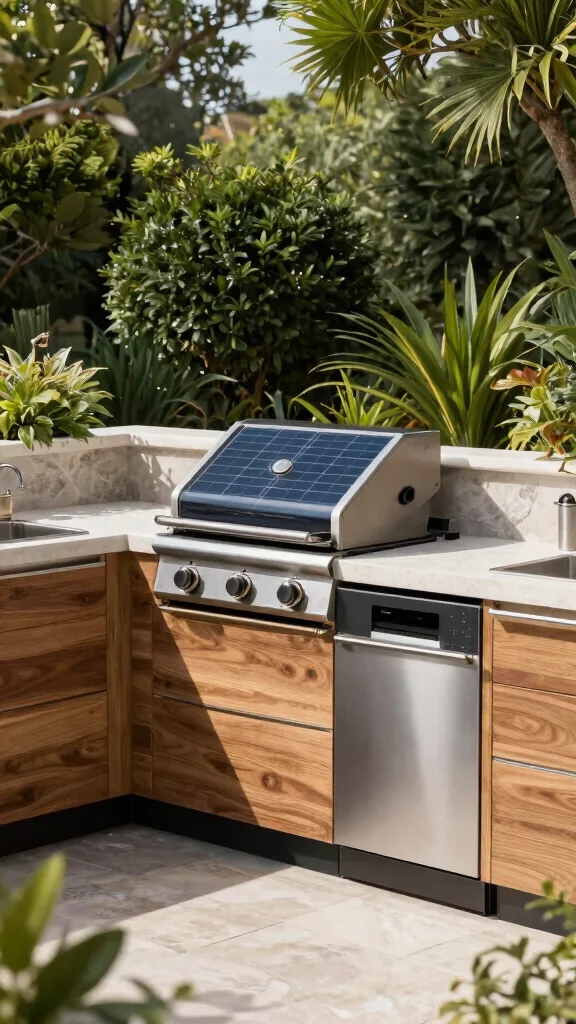
Are you looking to make your outdoor cooking more eco-friendly? Integrating energy-efficient appliances into your L-shaped kitchen is a fantastic choice.
Consider solar-powered grills or electric ovens, which significantly cut down on energy use. Look for appliances with an Energy Star rating that reduce consumption and save on your utility bills. An outdoor dishwasher that uses less water can keep your kitchen eco-friendly while managing cleanup.
– Solar Grills: Use the sun’s energy for sustainable cooking.
– Energy Star Appliances: Save energy and lower costs.
– Water-Efficient Dishwashers: Clean dishes with minimal water use.
By investing in these appliances, you not only simplify cooking but also contribute to a more sustainable lifestyle.
Dimensions & Size Guide
Standard Sizes & Measurements:
Creating an L-shaped outdoor kitchen requires careful attention to dimensions. The average width for an outdoor kitchen countertop is around 24 to 30 inches. This width allows enough space for food preparation and cooking.
The depth of your kitchen should range from 36 to 48 inches. This measurement provides ample space for appliances and cooking areas. You should also consider a minimum clearance of 36 inches between the countertop and any overhead structures, like canopies or pergolas.
When planning your layout, allow a minimum of 60 inches of free space in front of any appliances. This space is essential for safe and comfortable cooking.
Quick Reference Table:
| Size/Dimension | Best for: | Minimum space needed: |
|---|---|---|
| 24-30 inches wide | Countertops for food prep | 36 inches clearance |
| 36-48 inches deep | Countertops for appliances | 60 inches of free space |
| 36 inches height | Bar seating areas | 24 inches per stool |
Space Planning Tips:
1. Measure Twice: Before you start building, double-check all your measurements. It’s easy to misjudge space, especially in outdoor settings where natural elements can alter perceptions.
2. Consider Traffic Flow: Plan for clear pathways. You want to avoid cramming too much into one spot. Leave space for people to move comfortably around the cooking area and dining spots.
3. Appliance Placement: Keep similar appliances close together. For instance, place your grill near the prep area for easy access. This layout enhances your cooking experience and saves time.
4. Avoid Corners: When positioning your L-shaped kitchen, avoid placing appliances too close to corners. This setup can make accessing certain areas difficult and restrict movement.
5. Test It Out: If possible, mark your kitchen layout on the ground using tape or chalk. This visual representation can help you assess whether the space feels right before you commit.
Pro Tip: Always prioritize the dimensions of your cooking appliances. They dictate the overall functionality of your L-shaped outdoor kitchen. Ensure you leave enough clearance around these appliances for safe usage and easy access.
5. Built-in Seating for Socializing
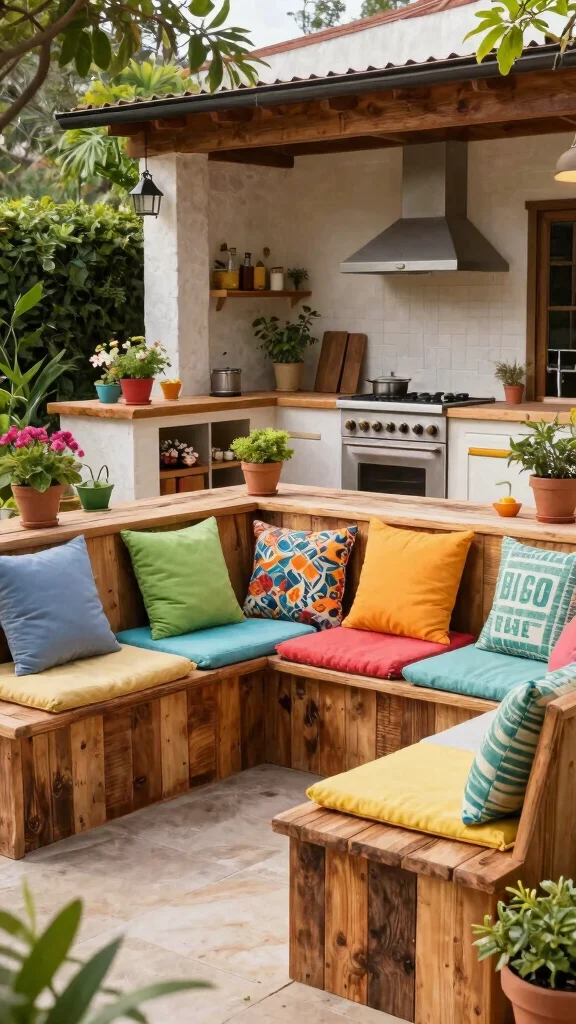
Do you want your outdoor kitchen to be a gathering place for family and friends? Built-in seating around your L-shaped kitchen creates a warm and inviting atmosphere.
Consider adding a bar-style seating area to one side, allowing guests to chat while you prepare meals. Use eco-friendly cushions to ensure comfort and durability.
– Bar Seating: Perfect for casual snacking and conversation.
– Integrated Sofas: Create a relaxed area for lounging or dining.
– Natural Materials: Choose recycled or sustainably sourced materials for seating.
This setup encourages connection and entertainment, making every meal an occasion to remember.
6. Weather Protection Solutions
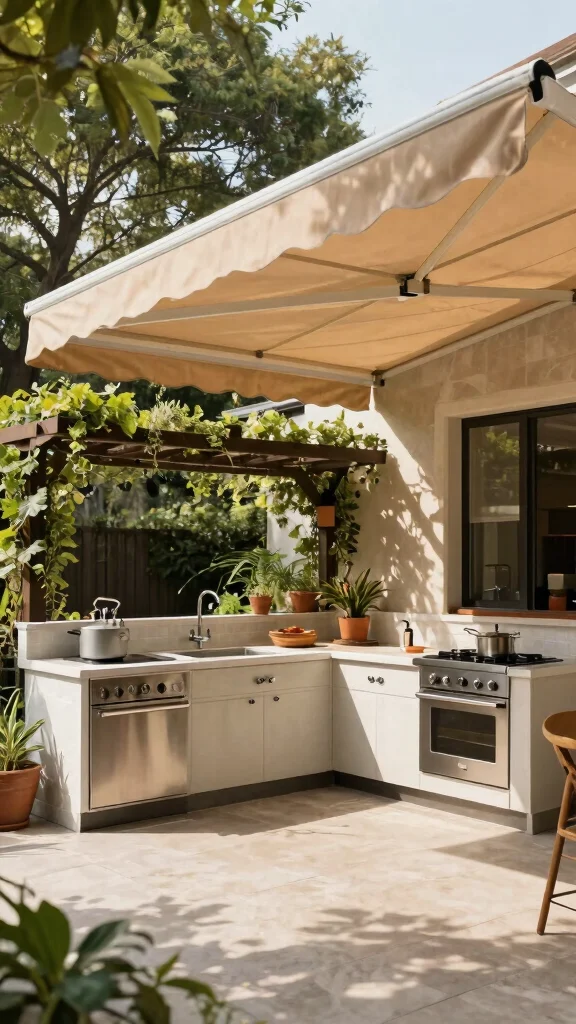
Love cooking outdoors but worried about unpredictable weather? Implementing protection solutions like awnings or pergolas ensures you can enjoy your kitchen year-round.
Retractable awnings provide shade in the summer and shelter during rain, while strategically planted trees can offer natural shade and enhance your garden’s beauty.
– Retractable Awnings: Flexible protection for any weather.
– Pergolas: Define your space while letting sunlight filter through.
– Natural Shade: Use trees to improve your outdoor cooking experience.
With these weather protection strategies, you can make the most of your outdoor kitchen, no matter the conditions.
7. Compost Station for Eco-Friendly Waste Management
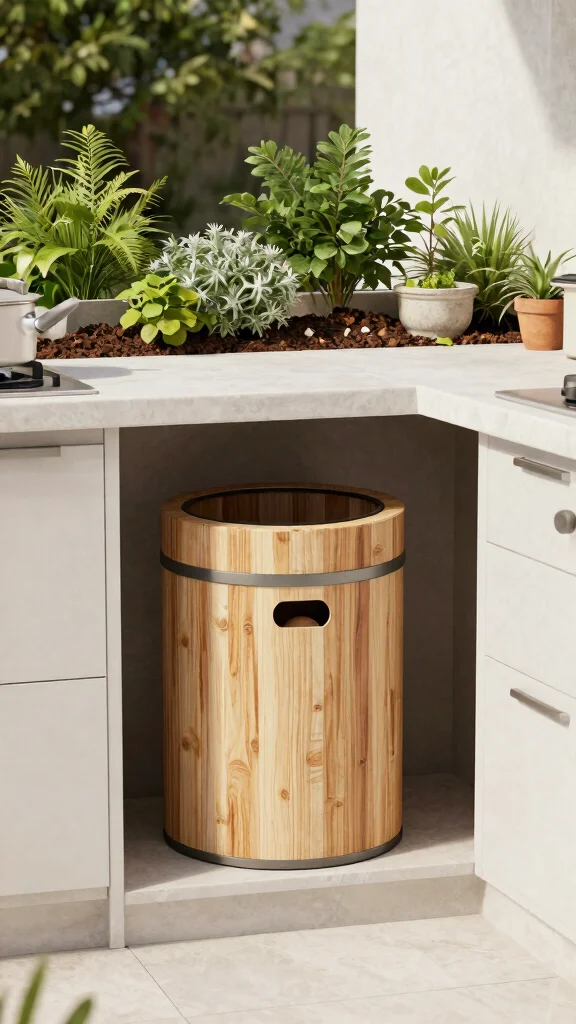
Want to make your outdoor kitchen even more eco-friendly? Adding a compost station is a smart way to manage waste while enriching your garden.
Design a compact compost bin that fits seamlessly into your kitchen layout, making it easy to recycle kitchen scraps from outdoor cooking.
– Convenient Location: Place the compost bin near your kitchen for easy access.
– Design: Use eco-friendly materials to blend the bin with your decor.
– Education: Teach family members about composting and its benefits.
This encourages sustainable practices while boosting your garden’s health!
8. Smart Technology for Efficient Cooking
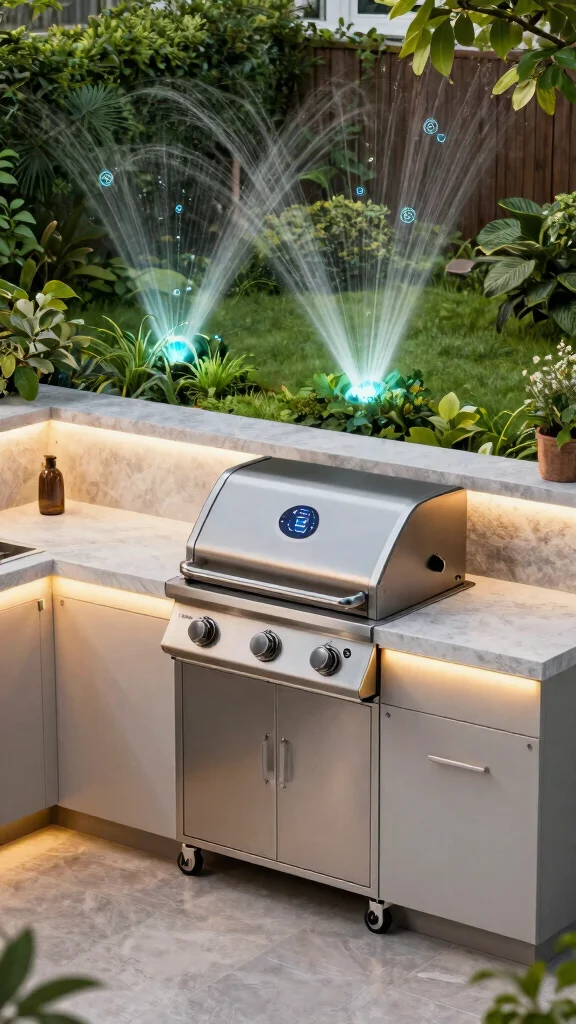
Are you ready to elevate your outdoor cooking with smart technology? Integrating features like smart grills and temperature sensors can make your cooking experience more enjoyable.
Consider adding a smart irrigation system that waters your garden efficiently, all manageable from your smartphone.
– Smart Grills: Control cooking temperatures and times from your device.
– Temperature Sensors: Ensure perfect cooking results every time.
– Smart Irrigation: Conserves water while keeping your garden thriving.
These technologies streamline cooking and support eco-friendly gardening practices.
9. Unique Lighting Features for Ambiance
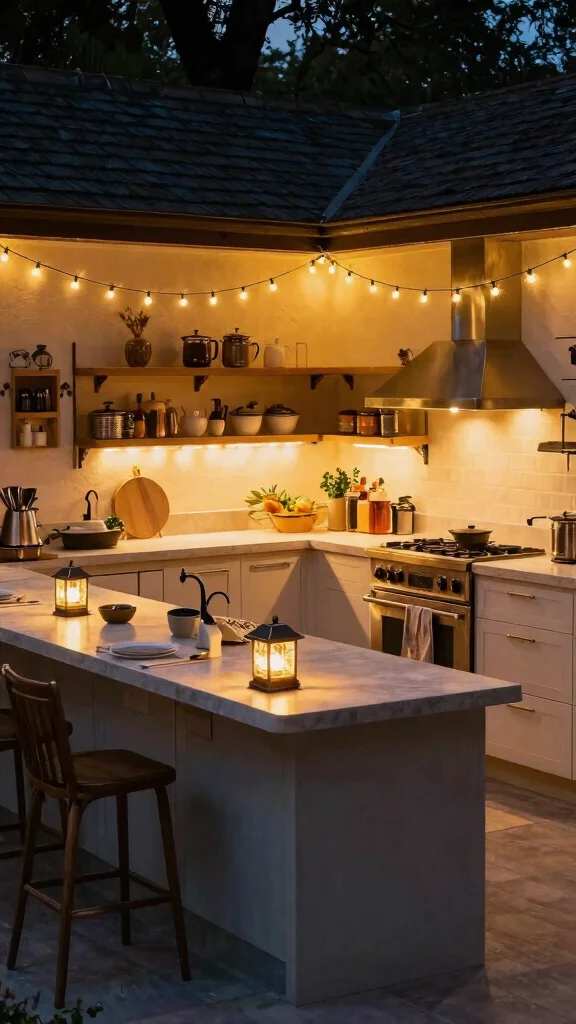
Want to create a cozy atmosphere in your outdoor kitchen? Unique lighting features are key to enhancing the ambiance and allowing for nighttime cooking and entertaining.
Consider string lights for a warm, inviting glow or solar lanterns for a rustic touch. Recessed lighting can keep your cooking area well-lit, ensuring safety while you whip up meals.
– String Lights: Add whimsy and warmth to your space.
– Solar Lanterns: Eco-friendly options that illuminate and charm.
– Recessed Lighting: Stylish and functional, perfect for your kitchen area.
Well-planned lighting encourages more outdoor gatherings, making your kitchen the go-to spot for friends and family.
10. Outdoor Storage Solutions for a Tidy Space
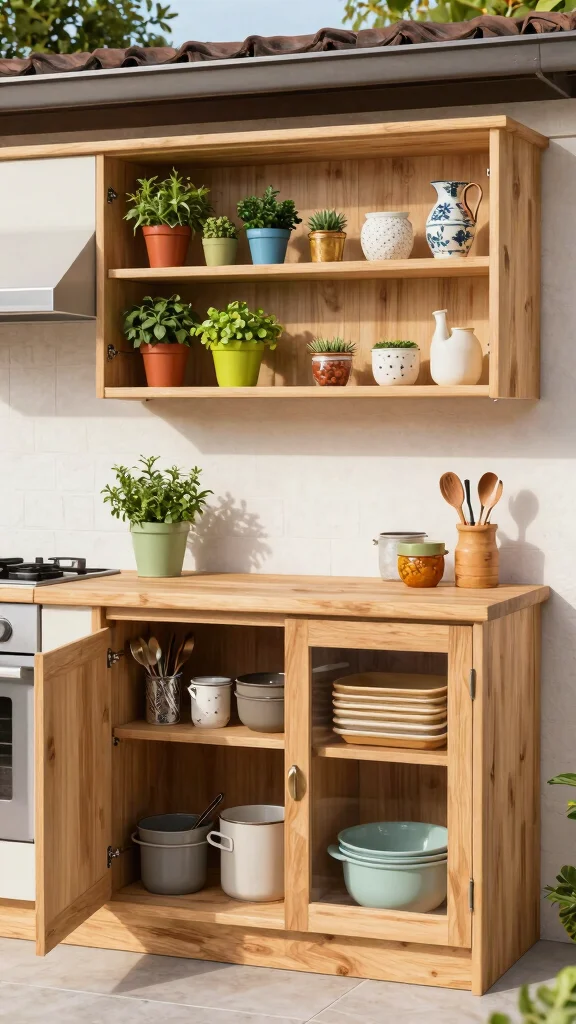
Is your outdoor kitchen feeling cluttered? Smart storage solutions can keep your space organized and efficient.
Incorporate cabinets and shelves made from sustainable materials to maintain an eco-friendly approach while storing utensils, pots, and gardening tools neatly.
– Cabinets: Protect your essentials from the elements.
– Open Shelving: Showcase herbs or decorative items for easy access.
– Tool Hooks: Hang frequently used tools for quick reach.
These solutions enhance your kitchen’s efficiency and contribute to a more sustainable lifestyle.
Did you know that l shape outdoor kitchen ideas with sustainable cabinets and open shelves can reduce clutter by up to 40%? Smart storage keeps utensils and tools dry, accessible, and ready for eco-friendly cooking.
11. Incorporating Natural Elements for Harmony
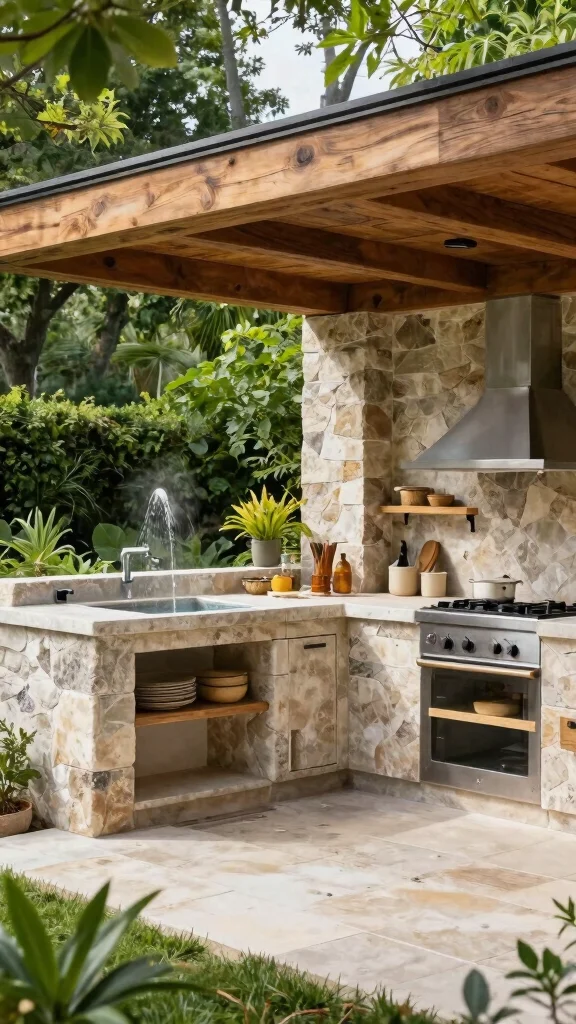
Do you want to create harmony in your outdoor kitchen? Incorporating natural elements can beautifully tie your space together.
Use natural stone, wood, and ample greenery to achieve an inviting atmosphere. Consider adding a calming water feature, like a small fountain, to enhance tranquility. Choose plants that thrive in your climate for a seamless transition between kitchen and garden.
– Natural Stone: Offers a timeless and organic touch.
– Water Features: Provide serenity and attract wildlife.
– Diverse Plant Life: Beautify the area and improve air quality.
These elements not only enhance your kitchen’s aesthetics but also create a peaceful environment, making outdoor cooking a true joy.
Conclusion
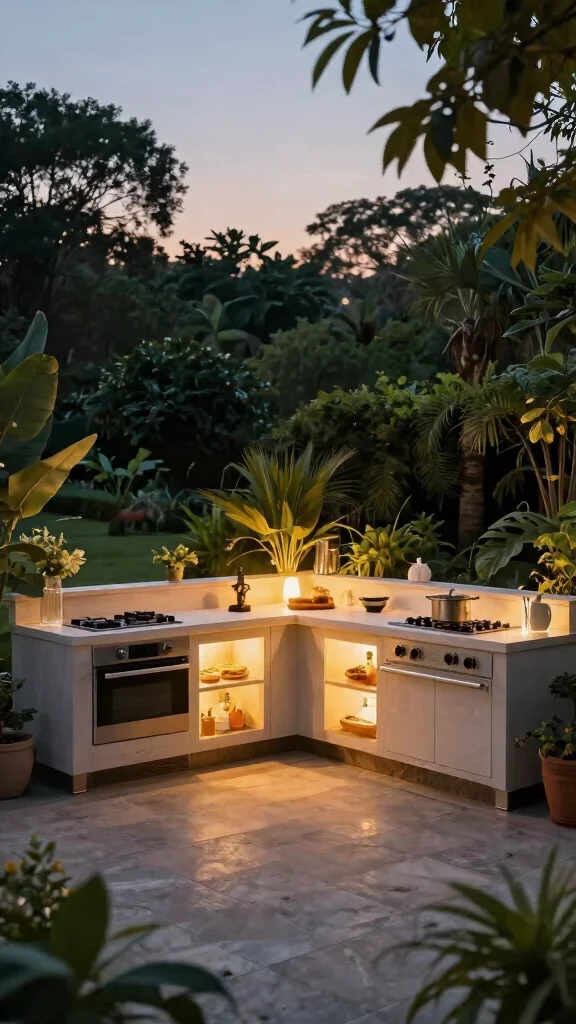
Designing an L-shaped outdoor kitchen that embraces sustainability can transform your outdoor cooking experience.
By integrating natural materials, efficient layouts, and eco-friendly practices, you create a space that is not only functional but also deeply connected to the environment. Consider these ideas as you create your ideal outdoor cooking oasis, making every meal a celebration of nature and culinary creativity.
Note: We aim to provide accurate product links, but some may occasionally expire or become unavailable. If this happens, please search directly on Amazon for the product or a suitable alternative.
This post contains Amazon affiliate links, meaning we may earn a small commission if you purchase through our links, at no extra cost to you.
Frequently Asked Questions
What makes an L-shaped outdoor kitchen ideal for eco-friendly garden spaces?
When you design an L-shaped outdoor kitchen, it creates efficient work zones with minimal movement, which saves energy and keeps you close to your garden.
For a sustainable impact, place the grill or oven on one leg, the sink and prep area along the other leg, and a dining or bar area at the corner to keep traffic flowing.
This generous layout supports smooth garden kitchen integration and outdoor cooking spaces while protecting your planting beds. Use energy-efficient appliances, LED lighting, and locally sourced or recycled materials to keep your outdoor kitchen design eco-friendly. Add shading, a rainwater catchment plan, and a small composting area to close the loop on waste and water use.
How can I incorporate sustainable features into an L-shaped kitchen layout for my garden?
Start with the big three: energy efficiency, materials, and water use.
Choose an induction cooktop and compact fridge with Energy Star ratings, and pick durable, low-maintenance finishes like stainless steel, stone, or concrete countertops.
Use garden kitchen integration ideas like built-in herb beds at the ends of the legs and a small composting/green-waste zone.
Install solar-powered or high-efficiency lighting, collect rainwater for cleaning or irrigation, and divert graywater where allowed.
For storage, use weatherproof cabinets with sustainable materials to keep your outdoor kitchen design practical and eco-friendly.
What are the best layouts or design ideas to keep outdoor cooking spaces generous in an L-shaped kitchen layout?
Keep the two legs of the L as primary work zones: prep and cooking on one leg, washing and cold storage on the other, with a generous central island or end seating to host guests.
Allow 4-6 feet of clearance around the island and adjoining counters to keep movement easy in outdoor cooking spaces.
Add a weatherproof storage wall and a hanging rack for utensils. Planting beds along the outer edge maintain garden kitchen integration and can host herbs for easy access. This approach makes the l-shaped kitchen layout feel expansive rather than cramped, perfect for backyard kitchen ideas that invite outdoor life.
Which materials and finishes work best for a durable, low-maintenance backyard kitchen design?
Durability in all weather calls for weather-resistant stainless steel appliances, quartz or Dekton countertops, and stone or concrete surfacing.
Use porcelain or stone pavers for the floor and permeable options to help with drainage. Choose weatherproof cabinets, and consider local or recycled materials to boost sustainability in your backyard kitchen design.
Seal wood elements like teak or cedar to resist weather, and include protective covers to reduce cleaning time and wear. With these choices, your outdoor cooking spaces stay beautiful and functional year-round.
How can I achieve garden kitchen integration with an L-shaped outdoor kitchen?
Start by facing your garden when you cook—position the legs to overlook herb beds or veggie patches. Create a nearby herb garden or edible landscape within arm’s reach of the prep area to boost garden kitchen integration.
Add vertical planters, trellises, and a small composting station to bring garden waste into the kitchen cycle. Use permeable pavers and proper drainage to protect soil health, and connect a rainwater harvest system to water plants and wash produce.
With thoughtful placement, your l shape outdoor kitchen ideas blend seamlessly with the garden, turning your space into one cohesive outdoor kitchen design and an inviting backyard kitchen idea.
Related Topics
l shape outdoor kitchen
outdoor kitchen design
eco-friendly gardening
sustainable outdoor spaces
backyard kitchen ideas
garden kitchen integration
L-shaped layout
cooking outdoors
modern outdoor kitchens
DIY outdoor kitchen
space-saving designs
beginner friendly