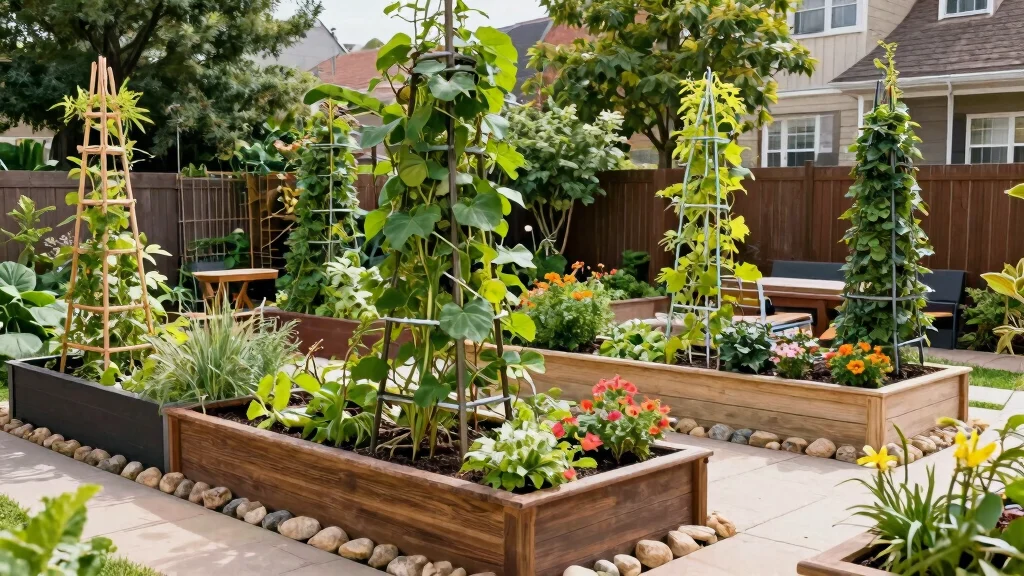
Creating a thriving garden in a small urban space can feel like a daunting task. With limited ground space, you might be craving ways to grow more plants without taking over your yard. That’s exactly why I put this post together. It’s all about raised garden beds with trellis systems that allow you to cultivate a vibrant garden while maximizing vertical growing space.
If you’re an urban gardener looking to spice up your green thumb and achieve better yields, this post is for you. Whether you’re passionate about growing vegetables, herbs, or beautiful climbing flowers, you’ll find trellis ideas that suit your style and space. Prepare to discover creative and practical solutions that won’t overwhelm your yard but will enhance it.
In this guide, you’ll find twelve inspiring raised garden bed trellis ideas that are not only space-efficient but also aesthetically pleasing. These concepts are designed to help you elevate your gardening game, allowing you to grow more while keeping your outdoor space tidy and enjoyable. Let’s dive in and explore how you can transform your urban garden with these innovative trellis solutions!
Key Takeaways
– Vertical growth maximization: Using trellises with raised garden beds helps you grow more plants in limited space, making them an efficient choice for urban gardening.
– Diverse trellis styles: Explore a variety of trellis designs, from rustic wooden A-frames to elegant copper pipes, that can suit different plant types and garden aesthetics.
– DIY opportunities: Many trellis ideas can be crafted with recycled materials or simple tools, making these projects accessible for any gardener interested in hands-on work.
– Aesthetic enhancement: Incorporating trellises not only boosts your garden’s functionality but also adds visual interest and beauty, creating an inviting outdoor space.
– Increased yields: By utilizing vertical gardening solutions, you can achieve higher yields and healthier plants, making the most of your gardening efforts in a small area.
1. Rustic Wooden A-Frame Trellis
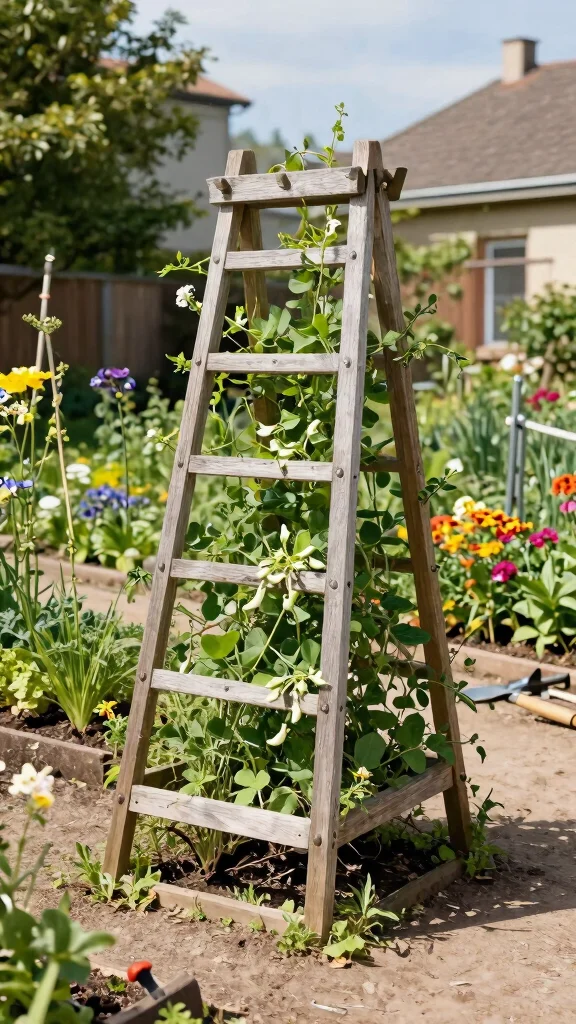
If you’re seeking a charming addition to your garden, a rustic wooden A-frame trellis is the perfect solution. This eye-catching design provides essential support for climbing plants such as beans and peas while enhancing your outdoor aesthetic. With its sturdy frame, it not only offers a strong structure for your vines but also infuses your space with a touch of countryside charm that brightens any urban backyard.
To get started with your A-frame trellis, consider using reclaimed wood to give it a sustainable twist. This design is particularly advantageous for small gardens, as it takes up minimal ground space while maximizing vertical growth.
Essential steps for building your A-frame trellis:
– Choose weather-resistant wood to ensure it lasts.
– Position your trellis in a sunny area for optimal growth.
– Opt for flowering vines to add extra beauty.
This trellis not only elevates your garden’s visual appeal but also promotes healthy plant development, creating a lively and engaging environment.
2. Vertical Pallet Garden with Trellis
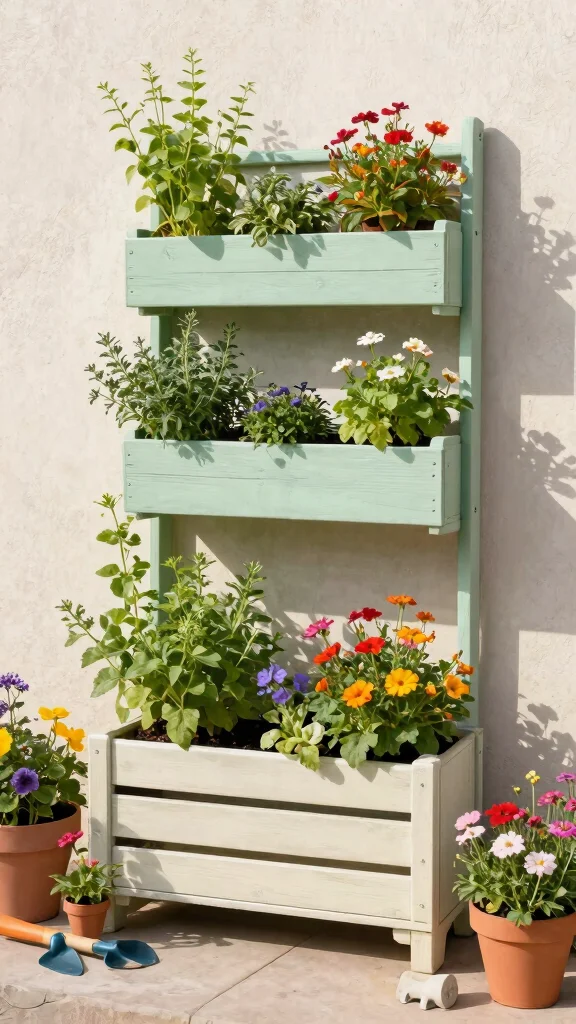
Turn an old wooden pallet into a stunning vertical garden that combines style and functionality! This DIY project enables you to cultivate herbs, flowers, or small vegetables in a unique vertical format that saves precious ground space. By leaning the pallet against a wall, you create a beautiful display while providing extra support for climbing plants through an attached trellis.
To maximize your pallet garden, ensure you clean the pallet thoroughly and consider painting or staining it for added durability and flair.
Steps to create your vertical pallet garden:
– Remove debris and dirt from the pallet.
– Apply paint or stain for protection and aesthetics.
– Secure a trellis to the back to support climbing plants.
– Fill sections with potting soil and your chosen plants.
This approach not only saves space but also lends texture and character to your garden, making it a delightful focal point for conversations.
❝ Turn tiny spaces into green moments—your pallet garden shows that big harvests fit in small yards. Lean the pallet against a wall, install a built-in trellis, and use raised garden beds with trellis to let herbs and climbers thrive upward while saving ground space. ❞
3. Elegant Copper Pipe Trellis
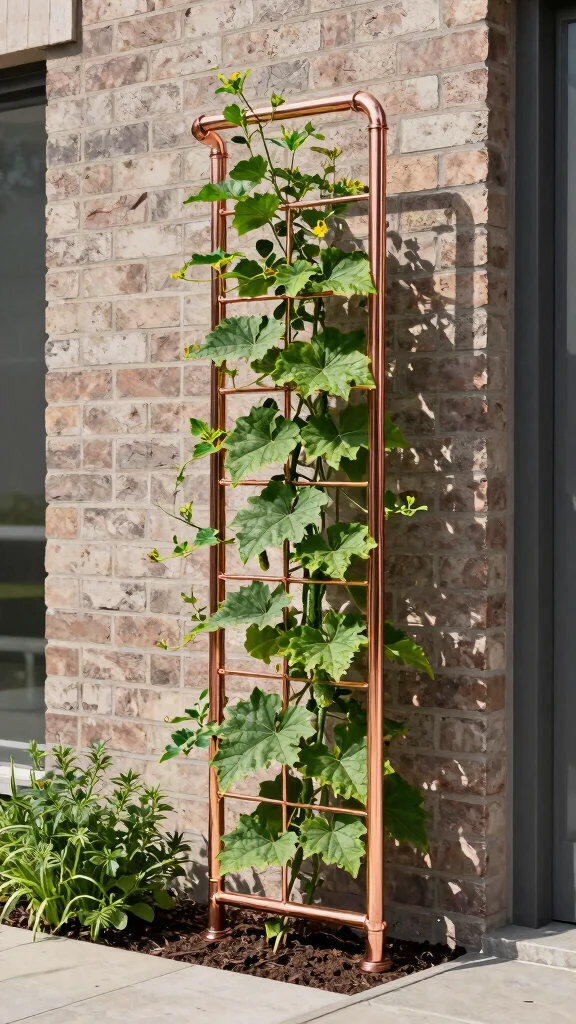
For a modern and sleek look, consider crafting a trellis from copper pipes. Copper adds a sophisticated touch to your garden that pairs beautifully with various plants. Its shiny surface not only catches the sunlight in a stunning way but also has antimicrobial properties that can promote plant health. This minimalist design effectively supports climbing vegetables like cucumbers and tomatoes while elevating the overall aesthetic.
When building your copper pipe trellis, ensure you cut the pipes to a suitable height for your plants. Arrange the pipes in a grid pattern to maximize support and surface area.
Key steps for constructing your copper pipe trellis:
– Cut pipes to your desired height.
– Assemble them into a grid for optimal support.
– Secure the structure firmly to the ground.
This elegant trellis not only enhances your garden’s visual appeal but also serves as a practical solution for small urban spaces.
4. Arched Garden Trellis for Climbing Flowers
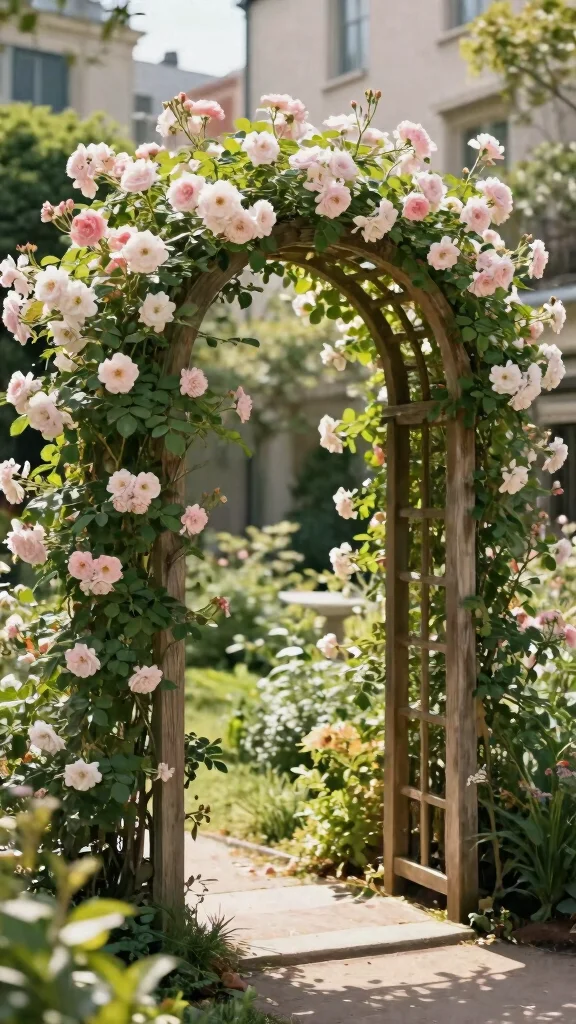
An arched garden trellis adds a whimsical touch while providing robust support for climbing flowers. Imagine vibrant clematis or sweet-smelling roses winding around this beautiful structure, creating a stunning focal point in your garden. The arch design not only aids plant growth but also draws the eye upward, making your garden feel larger and more inviting.
To build your arched trellis, select sturdy materials like wood or metal that can withstand the elements. Form the arch gently to ensure it’s wide enough for plants to climb comfortably.
Steps to create your arched trellis:
– Use durable materials for stability.
– Shape the arch to accommodate climbing plants.
– Anchor the trellis securely for lasting support.
This romantic trellis concept enhances your garden’s charm while maximizing your growing space.
5. Minimalist Metal Grid Trellis
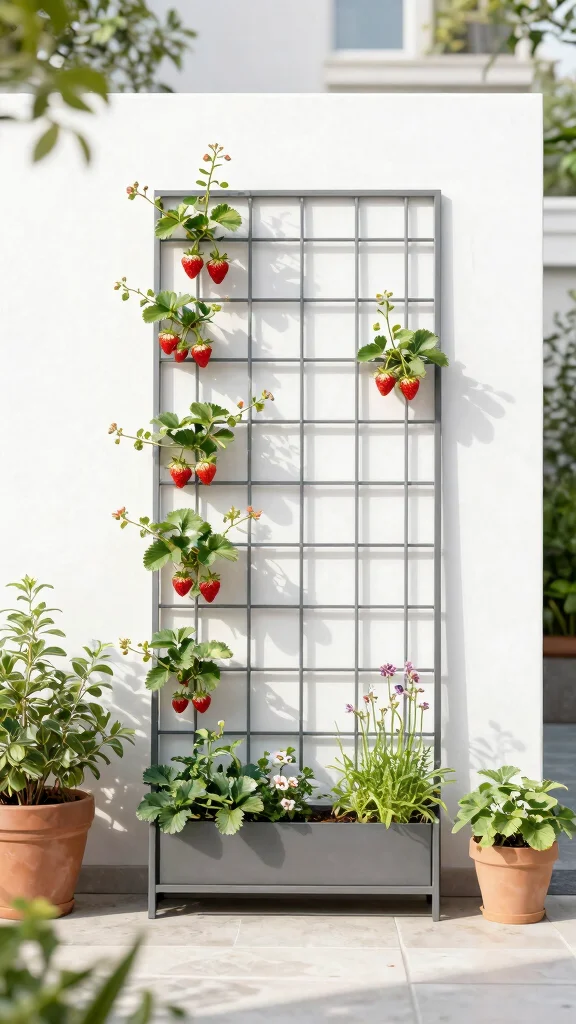
Embrace simplicity with a minimalist metal grid trellis that is perfect for smaller urban gardens. This straightforward design allows you to add height without overwhelming your space, creating an airy and open feel. You can choose to paint it in a variety of colors or leave it in its natural metal finish for a versatile look. This grid is ideal for supporting small fruits like strawberries or decorative climbing plants.
To construct this trellis, utilize lightweight metal rods or mesh for easy assembly. Ensure it’s secured properly against a wall or in the ground to maintain stability.
Steps for building your minimalist metal trellis:
– Choose lightweight materials for easy handling.
– Secure the grid structure for stability.
– Allow enough room for plants to grow freely.
A minimalist metal trellis not only supports healthy plant growth but also enhances your garden’s overall aesthetics.
Fun fact: a slim metal grid trellis can triple vertical space in tiny urban yards without crowding floor space. It works beautifully with raised garden beds with trellis, supporting strawberries and climbers while keeping your view open and breezy.
6. Garden Arch with Integrated Planters
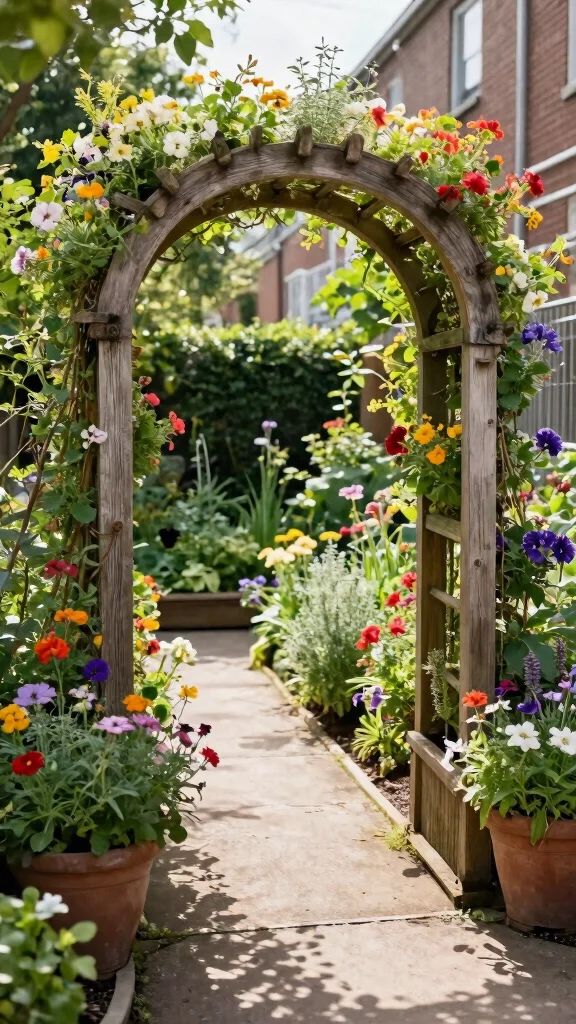
Combine beauty and functionality with a garden arch that features integrated planters on its sides. This creative design allows you to grow even more plants while creating an eye-catching visual impact. Walking through a lush archway filled with vibrant flowers and fragrant herbs is an experience like no other. This structure maximizes vertical space while enhancing the sensory experience of your garden.
To create your integrated planter arch, start with sturdy materials like wood or metal to construct the arch. Securely attach planters on either side to ensure stability.
Steps to build your integrated planter arch:
– Use durable materials for the arch.
– Attach planters securely for added beauty.
– Fill planters with vibrant flowers or herbs.
This trellis idea enriches your garden’s depth and diversity while expanding your growing area.
7. Trellis Panels as Garden Dividers
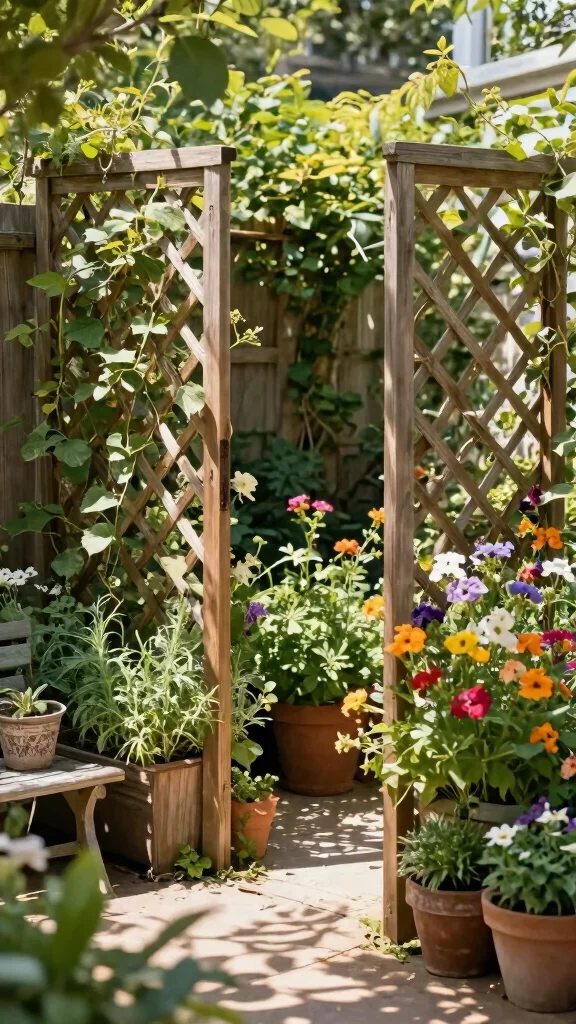
Utilizing trellis panels as garden dividers not only creates a structured look but also adds privacy and style to compact spaces. These panels can support climbing plants, forming a natural green wall that elegantly separates different sections of your garden. This design is ideal for defining spaces, allowing you to cultivate a variety of plants without feeling cramped.
To incorporate trellis panels effectively, choose durable materials like wood or metal that complement your garden’s design. Secure the panels in the ground or attach them to an existing fence for stability.
Steps for using trellis panels:
– Select materials that suit your garden style.
– Secure panels firmly for support.
– Plant climbing varieties alongside for added beauty and privacy.
This trellis concept maximizes your available space while enhancing your garden’s overall charm.
8. Trellis Lattice for Backyard Privacy
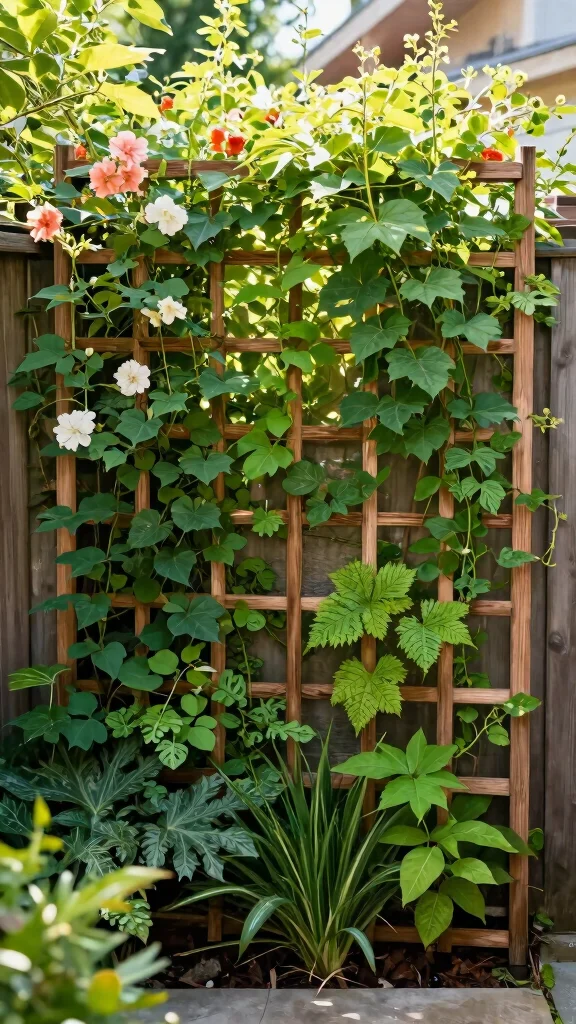
Enhance your backyard privacy with a trellis lattice that supports climbing plants while providing a cozy retreat. This functional and beautiful structure allows vines to grow thickly, creating a natural barrier from neighbors while maintaining a light and airy feel. Choose flowering plants that flourish on the lattice, transforming it into a vibrant living wall.
To create your trellis lattice, opt for sturdy wood or vinyl to ensure durability against the elements. Design a grid pattern to offer optimal support and airflow for your climbing plants.
Steps to build your trellis lattice:
– Use strong materials to withstand the weather.
– Create a grid for effective support.
– Secure it firmly to withstand winds.
This structure enhances your privacy without sacrificing the beauty of your garden, allowing you to enjoy your outdoor space to the fullest.
Key Trade-offs & Our Top Pick
1. Rustic Wooden A-Frame Trellis
– Pros:
– Adds a charming aesthetic to your garden.
– Supports heavy climbers like beans and peas.
– Easy to build using affordable materials.
– Cons:
– Wood can decay over time if not treated.
– Requires regular maintenance to keep it looking good.
– May not fit in modern or minimalist gardens.
– Best for: Gardeners looking for a natural look and those who enjoy DIY projects.
2. Vertical Pallet Garden with Trellis
– Pros:
– Utilizes recycled materials, making it eco-friendly.
– Very space-efficient, perfect for small areas.
– Provides a unique and rustic look.
– Cons:
– Limited to shallow-rooted plants.
– Pallets can be difficult to source in good condition.
– Requires effort to build and secure properly.
– Best for: Eco-conscious gardeners and those with creative flair.
3. Elegant Copper Pipe Trellis
– Pros:
– Sturdy and durable, resistant to rust.
– Adds a modern touch to your garden.
– Lightweight and easy to move around if needed.
– Cons:
– Higher initial cost compared to wood or PVC options.
– May require specific tools for assembly.
– Can get hot in direct sunlight, which might affect plants.
– Best for: Modern garden designs and those seeking long-lasting solutions.
4. Garden Arch with Integrated Planters
– Pros:
– Combines vertical growing space with planters for convenience.
– Creates a stunning focal point in any garden.
– Perfect for climbers and cascading flowers.
– Cons:
– More expensive due to multiple components.
– Takes up more floor space than a simple trellis.
– Installation can be complex and time-consuming.
– Best for: Gardeners wanting an eye-catching feature and who have sufficient space.
5. Minimalist Metal Grid Trellis
– Pros:
– Sleek design complements modern gardens well.
– Strong enough for a variety of climbing plants.
– Low maintenance and weather-resistant.
– Cons:
– Can be pricey compared to wooden trellises.
– Limited visual interest without plants.
– May not blend well with traditional garden styles.
– Best for: Minimalist gardeners who prioritize style and structure.
Expert Recommendation:
Best Overall: Rustic Wooden A-Frame Trellis
This option offers the best balance of charm, functionality, and affordability. You can create it using simple materials, making it a great choice for DIY enthusiasts. It supports a wide range of plants and enhances the aesthetic of your garden without overwhelming other elements. You get good value for your money while enjoying a timeless look.
Why We Picked This: While the rustic wooden trellis is our top pick, those seeking a more modern or eco-friendly option may prefer the copper pipe trellis or vertical pallet garden. Each option has its own strengths and weaknesses, so consider your gardening style, available materials, and how much maintenance you’re willing to commit.
9. Creative Use of Recycled Materials
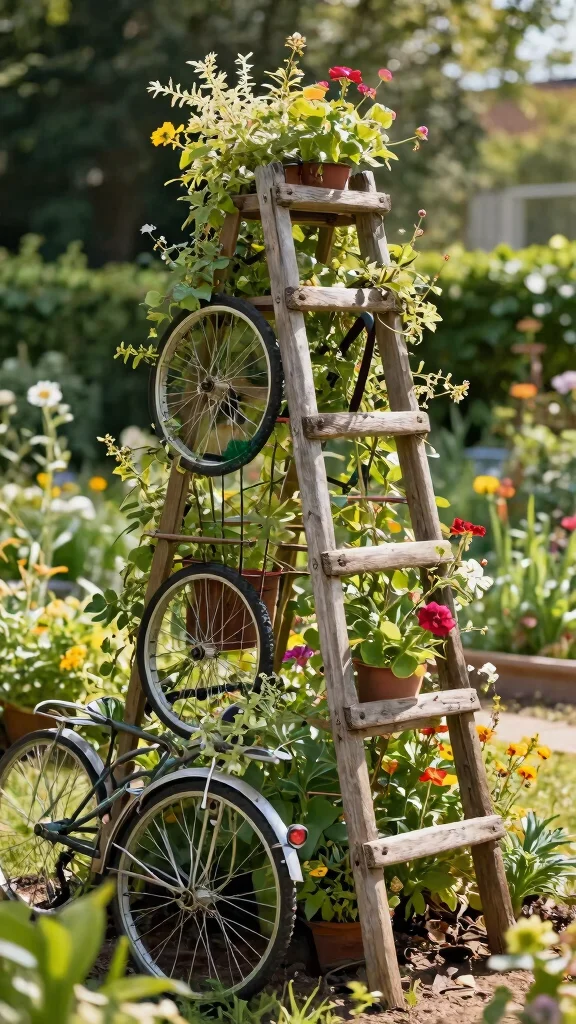
Unleash your creativity by utilizing recycled materials for your trellis! From bicycle wheels to old ladders, the possibilities are endless, allowing you to craft unique structures that reflect your personal style. This eco-friendly approach not only saves money but also adds character to your garden.
To maximize the potential of recycled materials, think outside the box regarding shapes and structures. Ensure that whatever you choose is robust enough to support climbing plants, and feel free to paint or decorate pieces to match your garden aesthetic.
Key tips for creating with recycled materials:
– Get imaginative with designs and shapes.
– Ensure durability for plant support.
– Decorate to personalize your trellis.
This innovative solution is perfect for urban gardens, allowing you to express individuality while optimizing vertical growing space.
10. Vertical Grid for Ferns and Vines
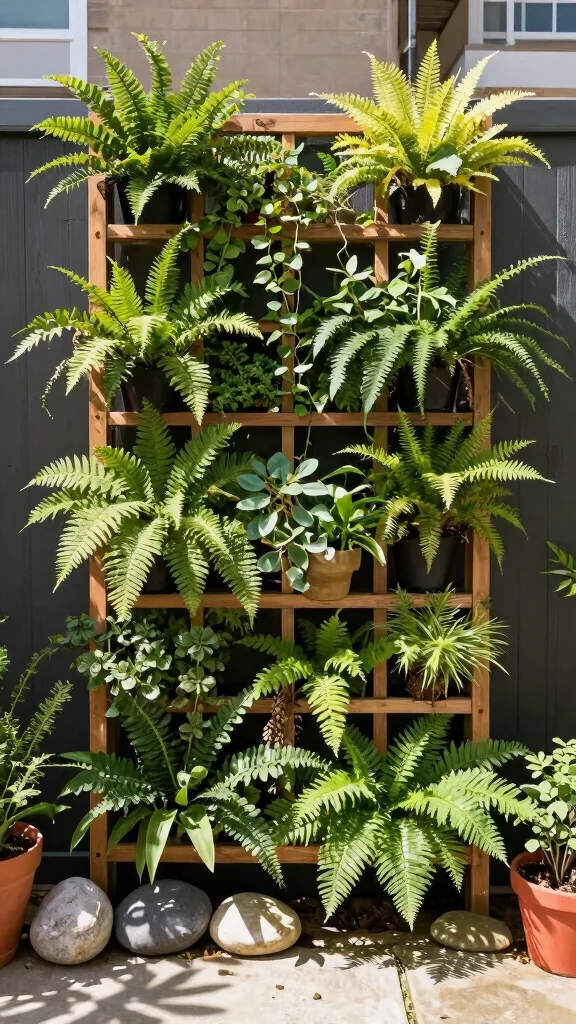
Create a visually striking vertical grid designed specifically for ferns and climbing vines. This type of trellis promotes structured growth, giving your garden a tidy and organized appearance. A vertical grid not only supports your plants but also contributes significantly to your garden’s overall design aesthetic.
To craft your vertical grid, use wood or metal rods to form a sturdy pattern. Ensure it’s anchored securely in the ground or attached to a wall for stability.
Steps for building your vertical grid:
– Use appropriate materials for strength.
– Anchor securely for stability.
– Choose climbing plants that will thrive in the grid.
This trellis idea is ideal for small urban areas, allowing you to cultivate various plants without consuming too much ground space.
11. Flower Wall Trellis for Vertical Blooms
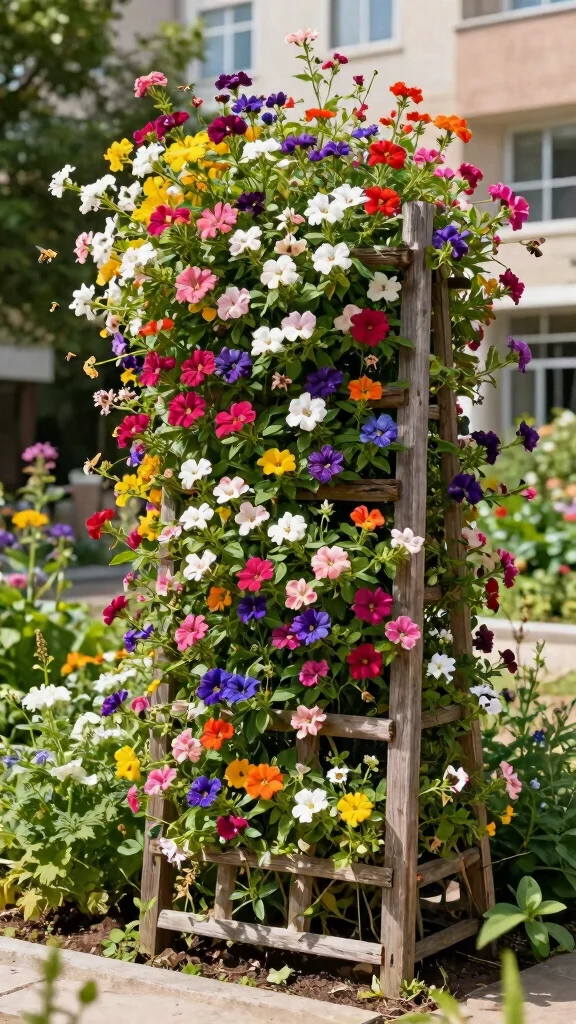
Transform your garden into a vertical haven with a flower wall trellis that showcases beautiful blooms. This design allows you to grow a diverse range of flowering plants vertically, perfect for enhancing small areas. A flower wall adds vibrant color and attracts pollinators, creating a lively ecosystem right in your backyard.
To create your flower wall trellis, choose a robust structure capable of supporting the weight of your plants. Space your plants according to their growth patterns to ensure they flourish, and mix various colors and types for added visual interest.
Steps for constructing your flower wall trellis:
– Select a sturdy framework for support.
– Arrange plants based on their growth needs.
– Incorporate different flowers for a dynamic display.
This trellis idea maximizes vertical space while delivering a breathtaking natural exhibit.
12. Trellis Herb Wall for Culinary Delights
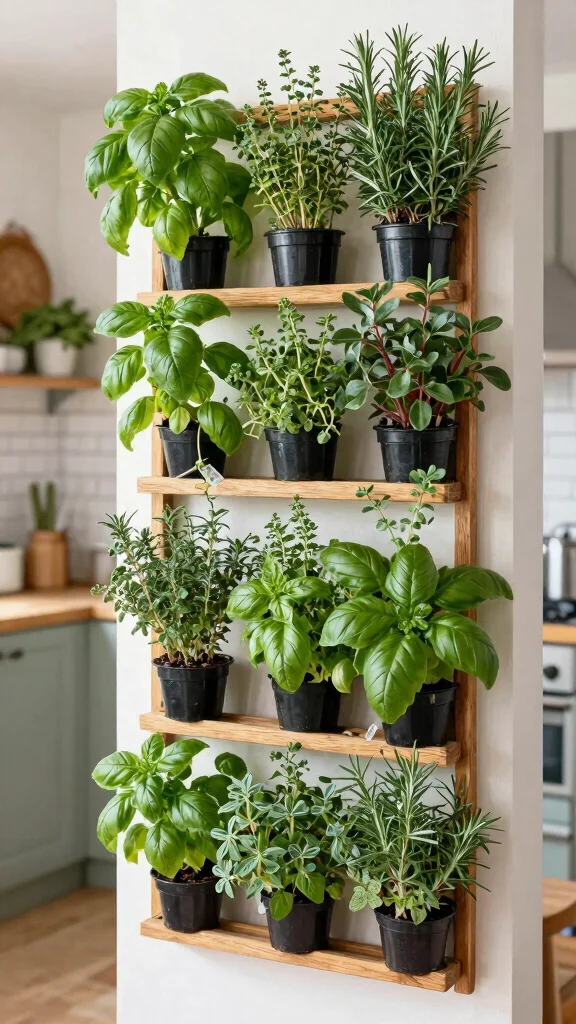
Combine your passion for gardening and cooking by designing a trellis herb wall! This inventive concept allows you to grow culinary herbs vertically, saving space and making your cooking experience more delightful. Imagine having fresh basil, thyme, and rosemary just steps away from your kitchen. This setup is both beautiful and functional, granting easy access to your favorite herbs.
To create your herb wall, build a trellis with horizontal slats that support your herbs effectively. Choose herbs that thrive in vertical environments, such as basil, mint, and oregano, and arrange them by height for easy accessibility and visual appeal.
Steps for building your herb wall:
– Construct a trellis with horizontal supports.
– Plant herbs suited for vertical growth.
– Organize them by height for convenience.
This trellis idea allows you to cultivate a flourishing herb garden that enhances your culinary creations while maximizing your available space.
Fun fact: A trellis herb wall can add up to 4 feet of usable herb height in a small kitchen garden, making raised garden beds with trellis feel instantly spacious. Your herbs stay close to your stove, ready for your culinary delights, easy to snip and enjoy.
Conclusion
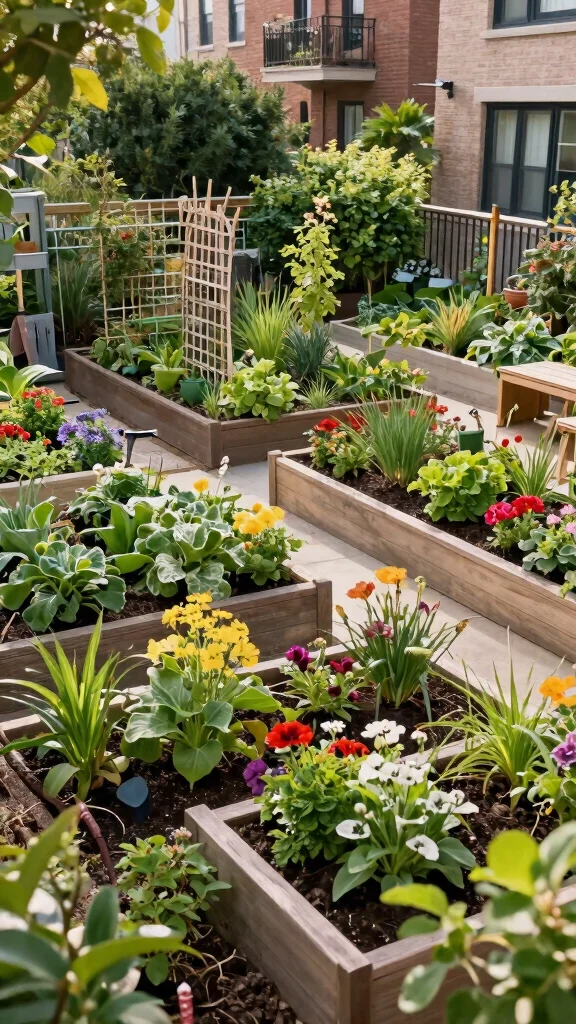
Incorporating raised garden beds with trellis structures into your urban garden can transform your limited space into a flourishing oasis.
From rustic wooden frames to innovative recycled designs, the possibilities are endless. Each trellis idea adds height, beauty, and functionality, allowing you to grow more while maintaining an organized and visually appealing garden. Embrace these vertical gardening solutions to maximize your yields and enjoy the beauty of nature right at home.
Note: We aim to provide accurate product links, but some may occasionally expire or become unavailable. If this happens, please search directly on Amazon for the product or a suitable alternative.
This post contains Amazon affiliate links, meaning we may earn a small commission if you purchase through our links, at no extra cost to you.
Frequently Asked Questions
What are the best raised garden beds with trellis designs for small urban spaces?
For small urban spaces, the trick is to pair a raised garden beds with trellis design that adds vertical growing space without overwhelming the area. Look for setups that integrate a sturdy trellis into or beside the bed, a classic vertical gardening solutions approach. Choose a bed size that fits your balcony or patio, then select a trellis style (woven lattice, wire mesh, or arched cattle panels) that can support the crops you plan to grow. Use weather-resistant materials and secure anchoring so vigorous plants won’t tip or sag. By thoughtfully placing sun exposure and selecting compatible crops (beans, cucumbers, peas, tomatoes), you can maximize yields in a compact footprint with space-saving garden designs.
How can I maximize garden yields using trellis ideas for vegetables in raised beds?
Maximizing yields starts with choosing the right trellis ideas for vegetables and pairing them with a well-prepared raised bed. Grow vining and climbing crops like pole beans, cucumbers, and tomatoes up the trellis to free ground space for root and leaf veggies. Use a vertical setup as part of your vertical gardening solutions to increase air circulation and sun exposure. Practice succession planting, prune wisely, and keep a consistent watering routine. When combined with thoughtful bed design, these steps turn a small space into a high-yield veggie hotspot and is a perfect example of space-saving garden designs in action.
What are some easy DIY garden trellis projects for raised beds?
Here are quick, budget-friendly DIY trellis ideas that work great with raised beds: a simple lattice panel mounted on sturdy posts, a cattle-panel arch for a tunnel effect, or a cedar slat trellis attached to the bed frame. You can also repurpose pallet slats into a vertical lattice or use vertical wire mesh panels with zip ties for a lightweight option. Each project can be tailored to your DIY garden trellis projects list and sized to fit your raised bed, enabling you to experiment with different crops while keeping the look clean and compact.
Are there space-saving garden designs that work well in tight urban yards?
Absolutely. In tight yards, think vertical stacking and modular layouts that maximize every inch. Use space-saving garden designs like a raised bed with a built-in trellis along one side, or stacked beds where the trellis acts as a divider on a vertical wall. Place beds along fences or railings to keep floor space open, and choose crops that thrive in vertical setups (beans, peas, gourds). These vertical gardening solutions help you squeeze more yield from limited square footage while keeping maintenance manageable and the yard visually appealing.
How do I choose the right trellis height and spacing for different vegetables in raised beds?
Start by matching trellis height to the crop: tall varieties need 6 feet or more, while shorter climbers can do with 4–5 feet. For spacing, give climbing crops enough room to spread without shading neighboring plants—typically 12–18 inches between main stems works for peas and beans, and 24–36 inches for larger cucumbers and tomatoes along a trellis. Anchor posts securely and, if possible, add adjustable supports so you can modify height as plants grow. This practical approach helps you maximize yields while keeping maintenance simple in your raised garden beds with trellis setup.
Related Topics
raised garden beds
vertical gardening
space-saving designs
trellis ideas
DIY trellis projects
urban gardening
maximizing yields
small space gardening
beginner friendly
easy gardening solutions
vegetable trellis
garden design tips