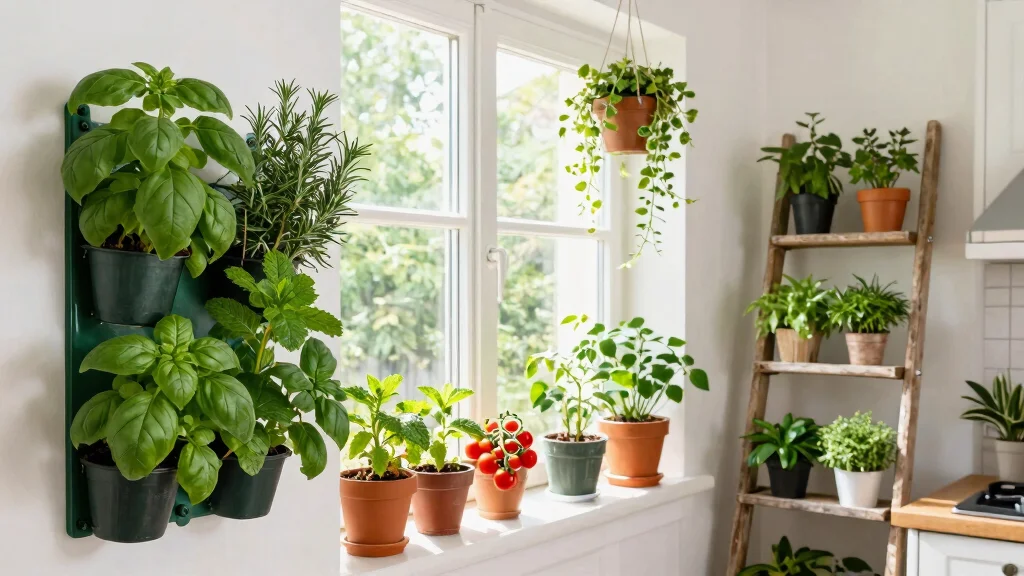
Creating a lively kitchen environment is something many of us crave, especially when cooking. Indoor plants not only bring freshness and color to your space but can also enhance your cooking experience. If you’ve been searching for ways to make your kitchen feel more alive without cluttering it up, you’re in the right spot. This post is packed with creative ideas for incorporating plants into small kitchen spaces, helping you balance style and practicality.
If you’re someone who loves to cook or simply enjoys spending time in the kitchen, you’ll find these suggestions especially appealing. Whether you’re a seasoned gardener or a novice looking for easy-care houseplants, this post has something for you. I’ve pulled together twelve kitchen plant ideas that are stylish, functional, and perfect for tight spaces. From herb gardens to unique container arrangements, you’ll discover ways to make your kitchen feel like a mini oasis.
Get ready to explore various plant ideas that will breathe life into your cooking area. You can enhance the aesthetics of your kitchen while also enjoying the benefits of growing your own herbs and vegetables. Let’s dive into these delightful options that will transform your culinary space!
Key Takeaways
– Wall-Mounted Herb Gardens: These save counter space and allow easy access to fresh herbs while cooking. Use wall planters to add a vertical garden touch to your kitchen.
– Hanging Planters: Utilize ceiling or wall-mounted hooks to hang plants. This adds greenery without taking up valuable surfaces.
– Windowsill Gardens: Take advantage of natural light by placing small pots of herbs or succulents on your windowsill. They thrive in sunlight and add a refreshing touch.
– Magnetic Spice and Herb Packs: These clever containers allow you to keep your herbs organized and accessible. Stick them to the fridge or any metal surface for easy use.
– Edible Flowers: Incorporating edible flowers not only beautifies your kitchen but also adds unique flavors to dishes. Consider planting varieties like nasturtiums or pansies for quick access.
1. Wall-Mounted Herb Gardens
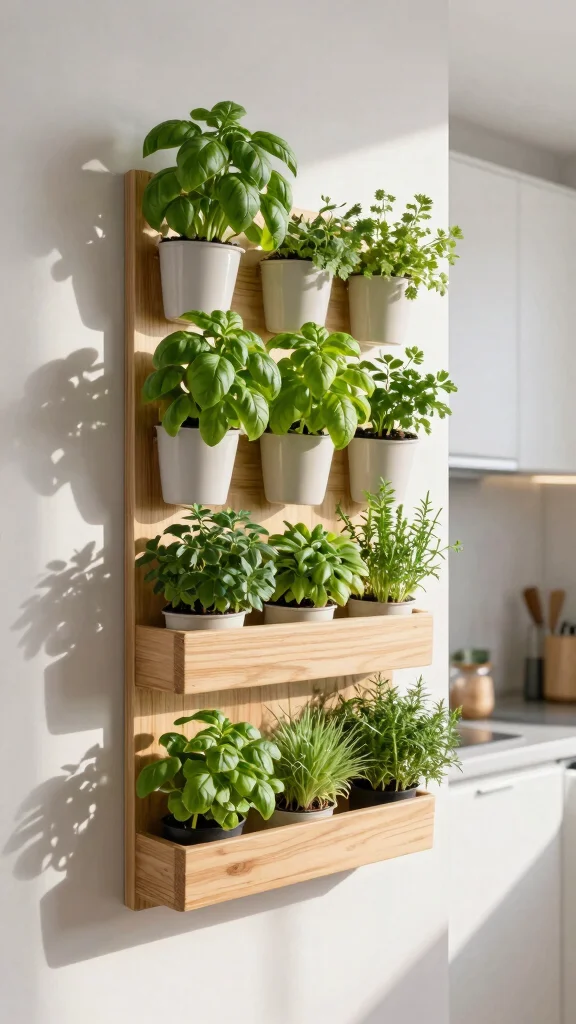
Are you looking to elevate your kitchen vibe while keeping it organized? Wall-mounted herb gardens are a stylish solution that brings fresh flavors right to your fingertips. Imagine snipping some basil or mint as you cook, all while enjoying a beautiful display of greenery on your wall. These vertical gardens not only save counter space but also add a touch of charm to your cooking area. With the right materials like wooden crates or metal grids, you can create a functional and eye-catching herb station.
To create your own wall-mounted herb garden, keep these tips in mind:
– Light: Choose a sunny spot that gets 6-8 hours of sunlight daily.
– Containers: Use pots with good drainage to avoid soggy roots.
– Variety: Mix herbs like parsley, cilantro, and chives for vibrant colors and delicious aromas.
Your kitchen will feel more alive with this fresh addition, and you’ll love the convenience of having herbs at arm’s reach!
Fun fact: A wall-mounted herb garden can free up 2–3 square feet of counter space and grow 5 herbs at eye level. It’s a practical, stylish way to boost your plants in kitchen ideas while cooking.
2. Hanging Planters
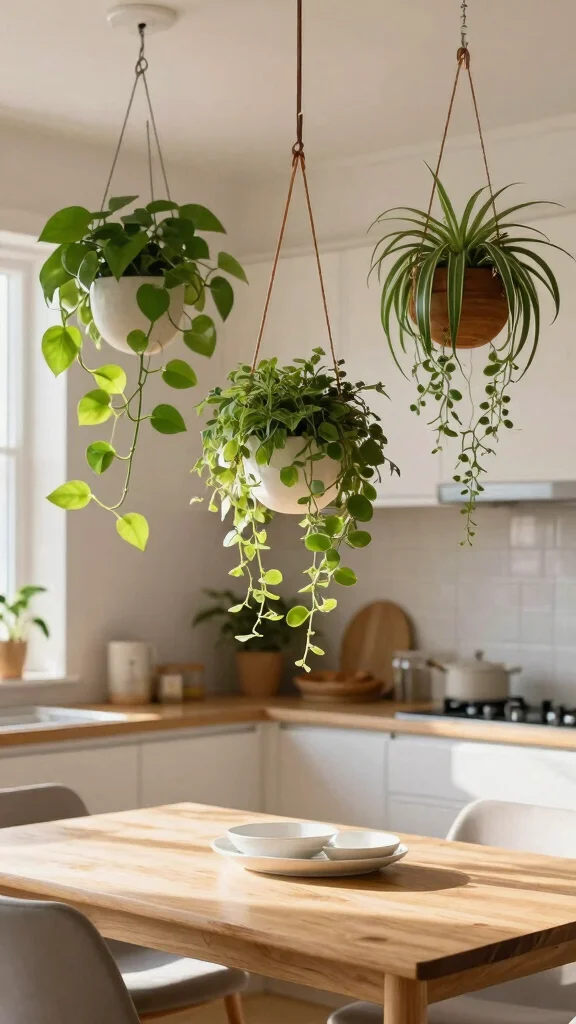
Feeling like your kitchen needs a bit of greenery? Hanging planters are a fun and creative way to introduce plants without taking up precious counter space. These eye-catching displays not only beautify your kitchen but also help purify the air. Whether you go for a bohemian macramé style or sleek metal designs, hanging plants can transform your cooking space into a lush oasis.
To make the most of your hanging planters:
– Choose Lightweight Plants: Pothos, spider plants, or philodendrons thrive and require little care.
– Vary Heights: Arrange your plants at different levels for visual interest.
– Consider Drainage: Ensure your pots have drainage holes or use liners to prevent mess.
These planters can create a cozy atmosphere, making your kitchen feel warm and inviting!
3. Windowsill Gardens
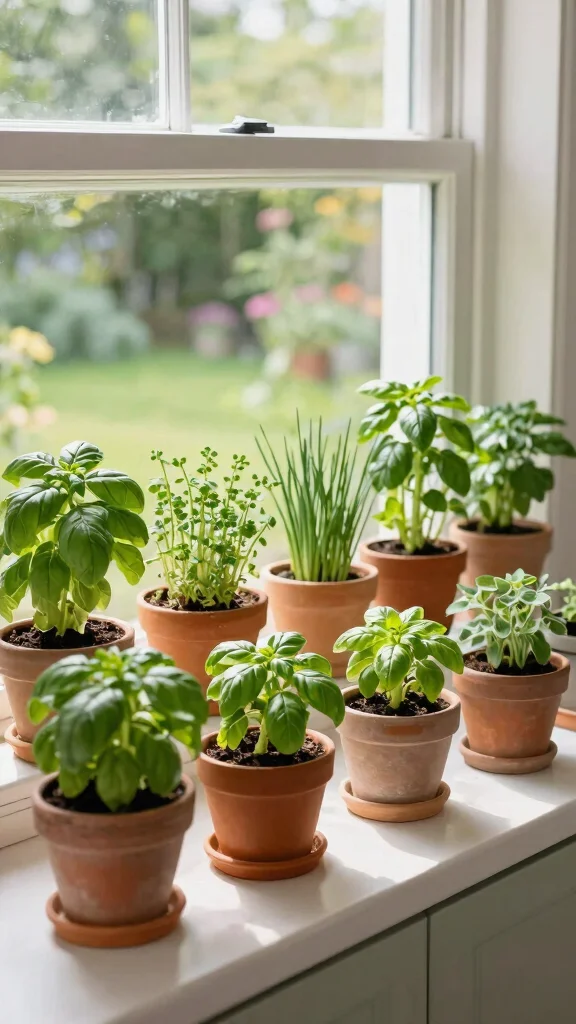
Do you want to turn your windowsill into a mini garden? This space offers natural light and is perfect for small pots of herbs, veggies, or flowers. Not only does it brighten your kitchen, but it also allows you to grow fresh ingredients right where you need them. Watching your plants thrive in this sunny spot can be incredibly rewarding.
For a successful windowsill garden:
– Select the Right Plants: Choose sun-loving herbs like basil, chives, or even mini bell peppers.
– Use Uniform Pots: Matching pots create a cohesive look. Terracotta or ceramic containers work beautifully.
– Rotate Plants: Turn them weekly for even growth without leaning.
Your windowsill garden will not only provide fresh flavors for your meals but also add life and color to your kitchen!
Ongoing Maintenance & Care Guide
Maintenance Schedule:
Daily/Weekly Tasks:
– Watering: Check the moisture level in the soil of your kitchen plants. Most herbs and small plants like to be watered when the top inch of soil feels dry. This usually takes about 5-10 minutes.
– Light Check: Rotate your plants to ensure they receive even sunlight. This helps prevent uneven growth. Spend about 5 minutes on this task.
– Dusting Leaves: Wipe leaves with a damp cloth to remove dust. This keeps the plants healthy and allows them to photosynthesize. Dedicate 10 minutes for a thorough clean.
– Fertilizer Application: If you use liquid fertilizers, apply them every couple of weeks during the growing season. This task usually takes about 5 minutes.
Monthly/Seasonal Tasks:
– Pruning: Trim any dead or overgrown leaves to encourage new growth. Spend about 15-20 minutes on this task.
– Repotting: Check if your plants need to be repotted as they grow. If roots are coming out of the drainage holes, it’s time to move them. This may take about 30 minutes.
– Pest Inspection: Look for any signs of pests like aphids or spider mites. Catching these early can save your plants. Spend about 10 minutes inspecting each plant.
– Soil Refreshing: Add fresh soil or compost to enhance nutrient levels. This is generally a seasonal task, taking around 30 minutes.
– Fertilizer Switching: Depending on the time of year, switch to a bloom-focused fertilizer for flowering plants. This task takes about 5 minutes.
Maintenance Summary Table:
| Task | Frequency | Difficulty | Time Needed |
|————————–|—————|—————|—————|
| Watering | Daily/Weekly | Easy | 5-10 mins |
| Light Check | Daily/Weekly | Easy | 5 mins |
| Dusting Leaves | Weekly | Easy | 10 mins |
| Fertilizer Application | Bi-Weekly | Easy | 5 mins |
| Pruning | Monthly | Moderate | 15-20 mins |
| Repotting | As Needed | Moderate | 30 mins |
| Pest Inspection | Monthly | Easy | 10 mins |
| Soil Refreshing | Seasonal | Moderate | 30 mins |
| Fertilizer Switching | Seasonal | Easy | 5 mins |
Common Issues to Watch For:
⚠️ Yellowing Leaves: This may indicate overwatering or nutrient deficiency. Check soil moisture and consider applying a balanced fertilizer.
⚠️ Wilting Plants: If your plants look droopy, they may need water. Check the soil’s moisture. If it’s too dry, give them a drink!
⚠️ Insect Infestation: Look for webs or small creatures on your plants. If you see these, remove the affected parts and consider using an insecticidal soap.
⚠️ Slow Growth: If plants aren’t growing as expected, they may need more light or nutrients. Assess their location and consider relocating them to brighter spots or adding fertilizer.
⚠️ Brown Edges on Leaves: This could mean underwatering or low humidity. Ensure you’re watering adequately and consider misting the leaves if your kitchen is dry.
Care Tips:
💡 Group Plants Together: Keep your plants in clusters on shelves or windowsills. This helps maintain humidity and makes for a beautiful display.
💡 Use Quality Soil: Invest in a good potting mix that drains well but retains moisture. This will promote healthy root growth and prevent root rot.
💡 Label Your Plants: If you have different herbs or plants, label them. This helps you remember care needs and makes watering easier.
💡 Keep a Watering Schedule: Use a calendar or app to remind you when to water and fertilize. Staying organized will help your plants thrive.
💡 Experiment with Light: If a plant isn’t thriving, try moving it to a different spot. Some plants prefer direct sunlight, while others thrive in partial shade.
With this guide, you’ll maintain a lively and productive kitchen garden without excessive hassle. Your plants will not only brighten your space but also provide fresh herbs and flavors for your meals!
4. Small Container Gardens
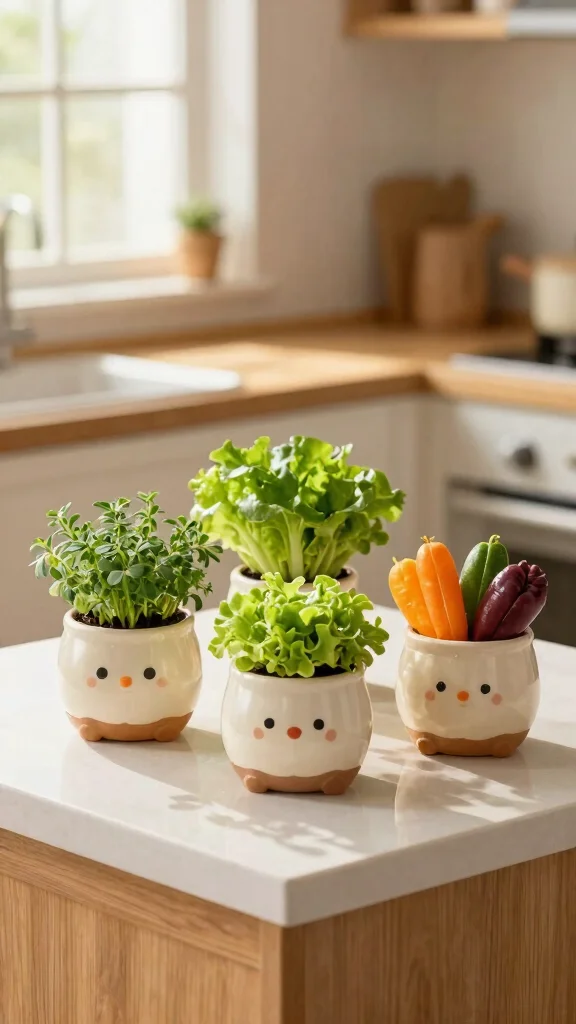
Craving a touch of nature in your compact kitchen? Small container gardens allow you to grow your favorite herbs and salad greens without taking up too much space. These mini gardens can fit on countertops or small tables, making them both convenient and accessible. Plus, they add a charming touch to your kitchen decor.
To set up your small container garden:
– Choose Appropriate Containers: Look for pots that allow good drainage and room for roots. Window boxes or tiered planters are great options.
– Select Fast-Growing Varieties: Think about quick-to-harvest plants like radishes or salad greens that are ready in no time.
– Group Pots Together: Arranging several pots creates a fuller look without crowding your space.
Your small container garden will make cooking feel more connected to nature!
5. Magnetic Spice and Herb Packs
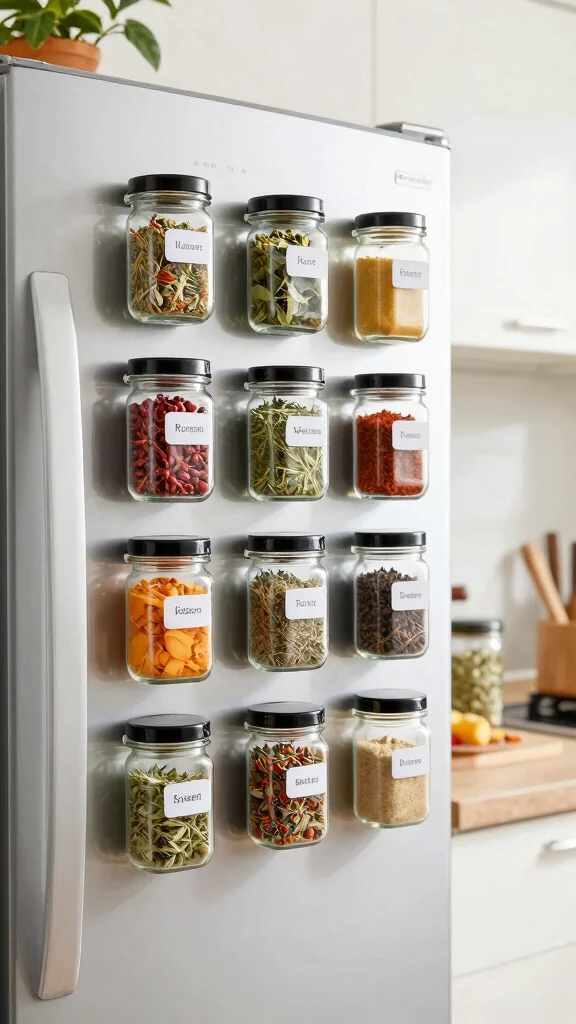
Looking for a smart and stylish way to store your spices? Magnetic spice and herb packs not only keep your favorites accessible but also add a fun element to your kitchen decor. Attach them to your fridge or any magnetic surface, making it easy to grab what you need while cooking, all while keeping your herbs organized.
To create your magnetic spice packs:
– Choose Magnetic Containers: Opt for small jars or tins with magnetic backs.
– Label Clearly: Use a label maker or write directly on the jar for easy identification, maybe even color-code them.
– Fill with Fresh Herbs: Dry out your homegrown herbs or stock up on organic spices to fill these jars.
This creative storage solution keeps your kitchen neat and encourages you to incorporate fresh flavors into your cooking!
6. Ladder Plant Stand
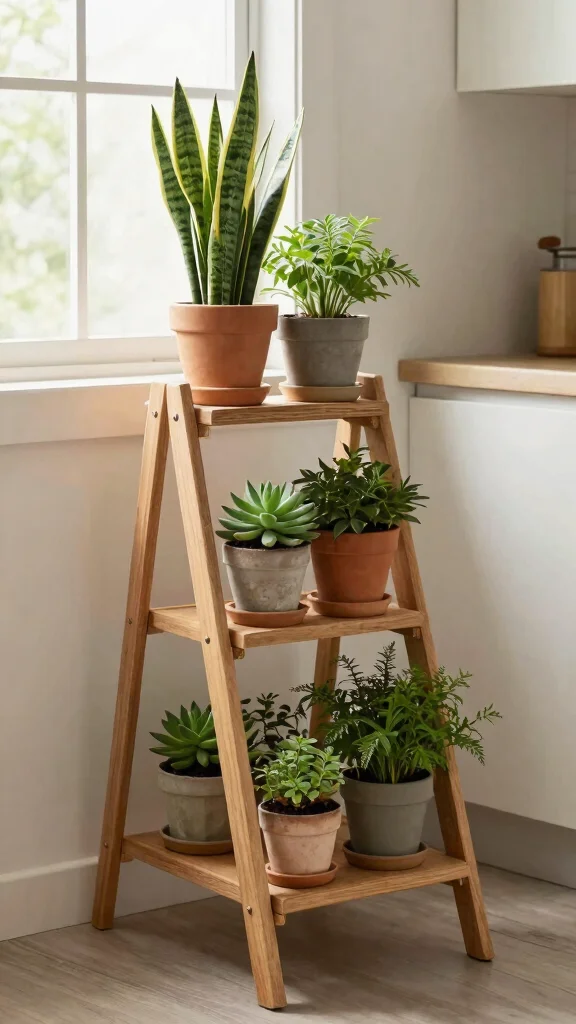
Want to display your indoor plants in a stylish way? A ladder plant stand is a chic option that fits well in kitchens with limited space. It allows you to showcase different pots and can easily tuck into any corner. Choose from wooden or metal designs that complement your kitchen style.
Here’s how to maximize your ladder plant stand:
– Layer Your Plants: Place taller plants on the bottom and smaller ones on the top for a striking visual effect.
– Mix Pots: Combine ceramic, terracotta, and metal pots for texture and interest.
– Choose Easy-Care Plants: Look for low-maintenance options like snake plants or pothos that require minimal attention.
This setup not only enhances your kitchen decor but can also improve air quality, making the space feel even more inviting!
Small kitchens just need clever staging. A ladder plant stand turns clutter-free corners into green, usable space—making plants in kitchen ideas feel effortless and stylish. Pro tip: layer taller pots on the bottom, smaller ones on top for instant visual drama.
7. Under-Shelf Planting
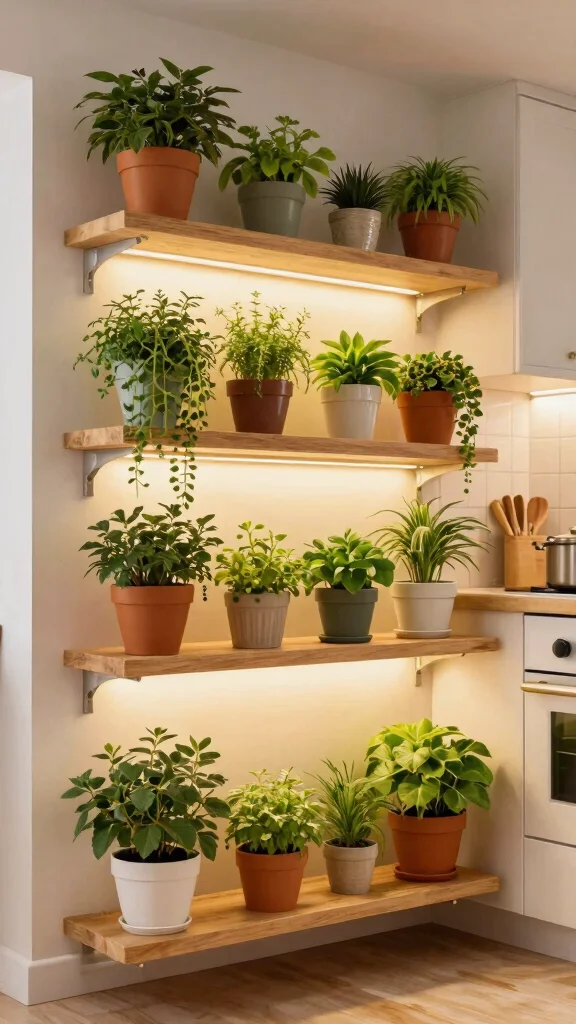
Do you want to make the most of every inch in your kitchen? Under-shelf planting is an innovative way to utilize the space beneath your shelves for small pots or hanging plants. This technique keeps your kitchen looking lush while saving valuable counter space. You can easily hang pots or install small brackets for lightweight plants.
To get started with under-shelf planting:
– Select Small Pots: Use shallow pots that fit comfortably under your shelves.
– Use Clips or Hooks: Install small hooks or clip-on pots to secure them in place.
– Opt for Trailing Plants: Plants like string of pearls or herbs like mint will create a lovely cascade over the edges.
This method not only saves space but also adds a unique touch to your kitchen, making it truly yours!
Fun fact: Under-shelf planting is a smart move in plants in kitchen ideas, adding up to 15% more greenery to a tiny kitchen by reclaiming vertical space. Hang small pots or brackets to keep counters clear, while herbs stay within easy reach for cooking.
8. Reclaimed Wood Planters
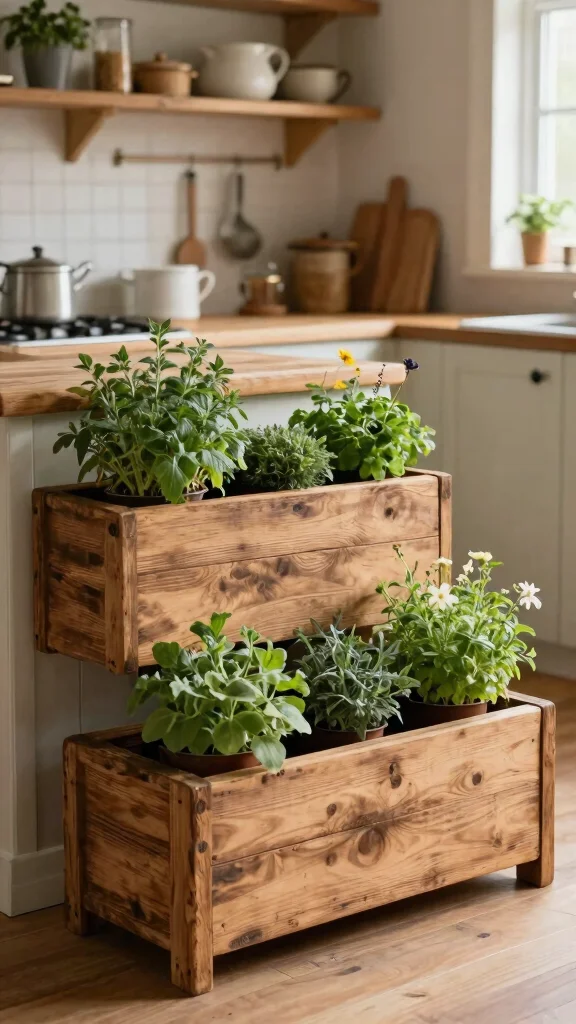
Want to add some rustic charm to your kitchen? Reclaimed wood planters are a sustainable choice that brings character to your indoor gardening. They can be DIY projects or purchased from local artisans, adding a handcrafted element to your space.
To make the most of reclaimed wood planters:
– Choose the Right Size: Ensure they fit your kitchen and the plants you wish to grow.
– Seal Carefully: If making them yourself, seal the wood to prevent moisture seepage.
– Mix Plants: Combine herbs with flowers for a colorful contrast and functionality.
This eco-friendly approach not only beautifies your kitchen but also supports sustainable practices, creating a lovely indoor garden!
9. Succulent Arrangements
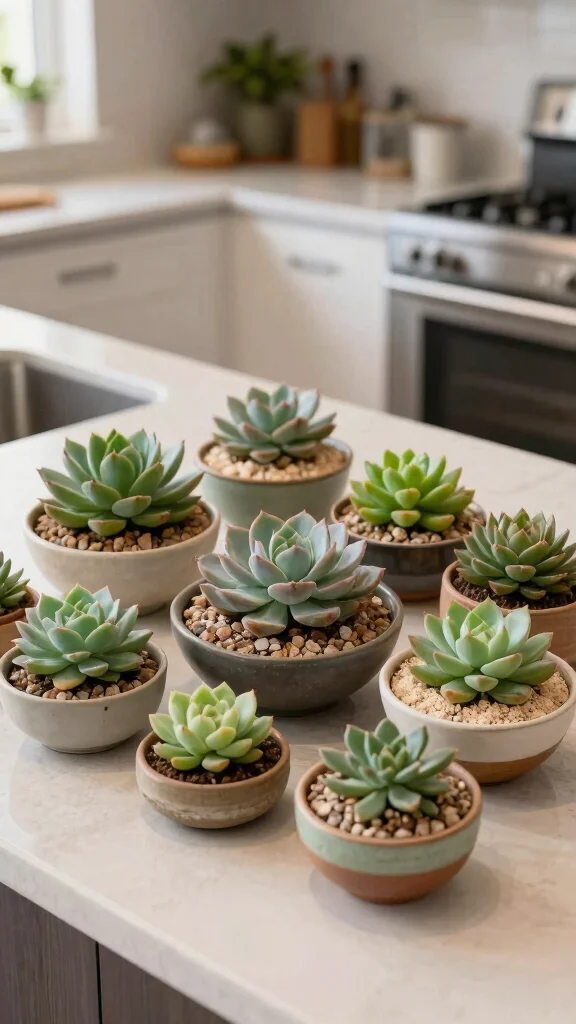
Are you searching for low-maintenance plants to brighten up your kitchen? Succulent arrangements are perfect for those who may not have a green thumb! These hardy plants require minimal care and thrive in sunny spots, offering various shapes and colors to enhance your decor.
Here’s how to create a stunning succulent display:
– Choose a Variety: Mix different types of succulents such as Echeveria, Haworthia, and Sedum for visual interest.
– Use Shallow Containers: Succulents thrive in shallow bowls or terrariums, as they don’t need deep soil.
– Add Decorative Elements: Include stones, sand, or driftwood in your arrangements for added texture.
Succulents not only enhance your kitchen’s look but also provide a charming, low-maintenance option for adding greenery!
10. Hydroponic Systems
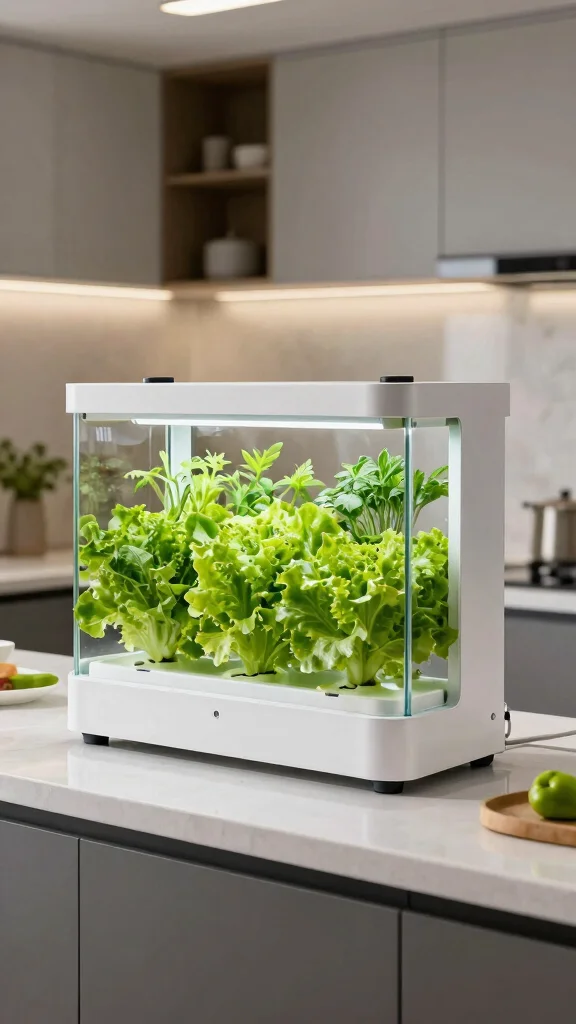
Do you want to grow fresh greens in your small kitchen? Hydroponic systems are an innovative way to cultivate plants without soil, making them ideal for urban dwellers. Compact hydroponic kits designed for kitchen use can fit on countertops or windowsills, providing fresh produce right at your fingertips.
To set up your hydroponic garden:
– Choose the Right Kit: Select a system that suits your space and gardening goals.
– Select Easy Greens: Start with plants like lettuce, spinach, or herbs that do well in hydroponic systems.
– Monitor Nutrients: Regularly check and adjust nutrient levels in the water for optimal growth.
Hydroponics can also spark conversations, showcasing your commitment to sustainability while enhancing your kitchen with fresh, home-grown produce!
11. Repurposed Jars and Bottles
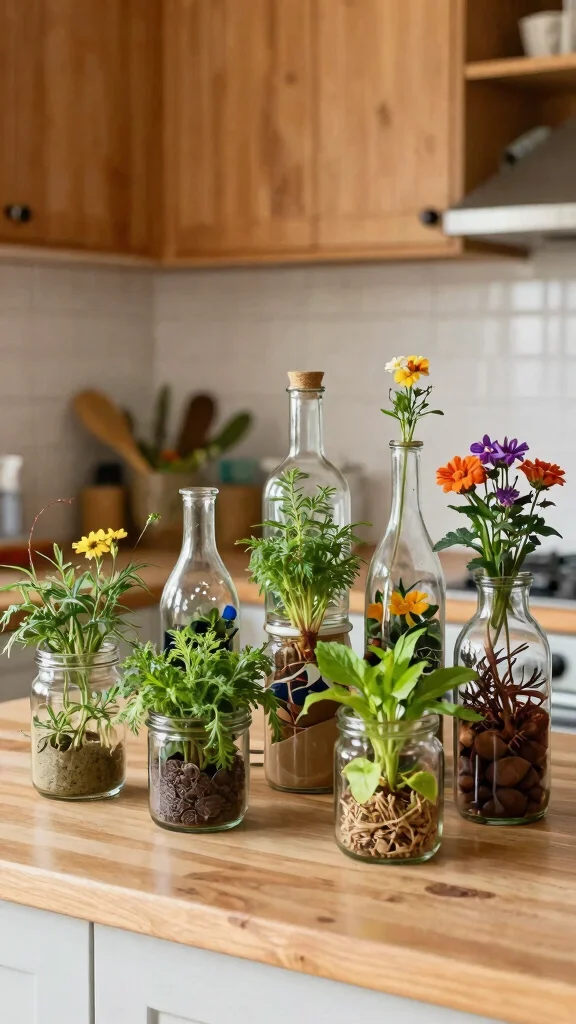
Looking for a creative way to incorporate plants into your kitchen? Repurposing jars and bottles as planters is a fun and eco-friendly solution. This method allows for creativity while adding a rustic touch, whether using glass jars or old bottles to reflect your personal style.
To create your upcycled planters:
– Select Your Containers: Choose jars or bottles in various sizes for an eclectic look.
– Prepare Them: Clean your containers and drill drainage holes if necessary.
– Plant Wisely: Fill with potting soil and choose smaller plants or herbs that thrive in tighter spaces.
These unique planters not only serve as conversation starters but also contribute to a sustainable lifestyle by reducing waste while giving your kitchen a trendy makeover!
12. Edible Flowers
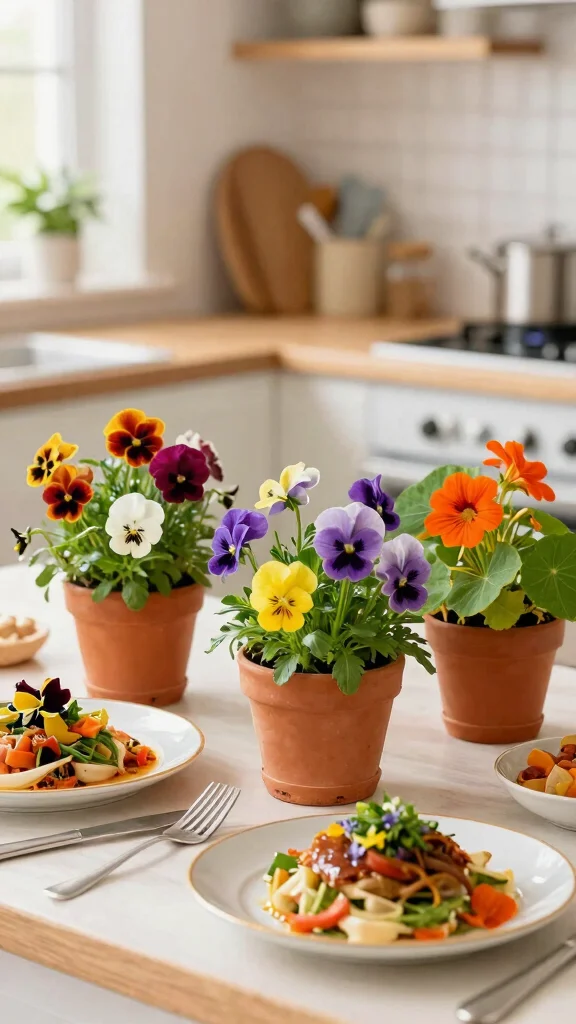
Are you ready to add a splash of color and flavor to your dishes? Edible flowers are a delightful addition that not only beautify your kitchen but also enhance your culinary creations. Imagine garnishing your dishes with bright nasturtiums or pansies, making every meal feel special.
To grow your own edible flowers:
– Choose the Right Varieties: Look for edible options such as violets, marigolds, or chamomile.
– Plant in Containers: Use standard pots and ensure they receive plenty of sunlight.
– Plan for Rotation: Some flowers bloom quickly, so consider planting in succession for a continuous harvest.
Edible flowers not only add color but also elevate your cooking experience, bringing joy to every meal!
Conclusion
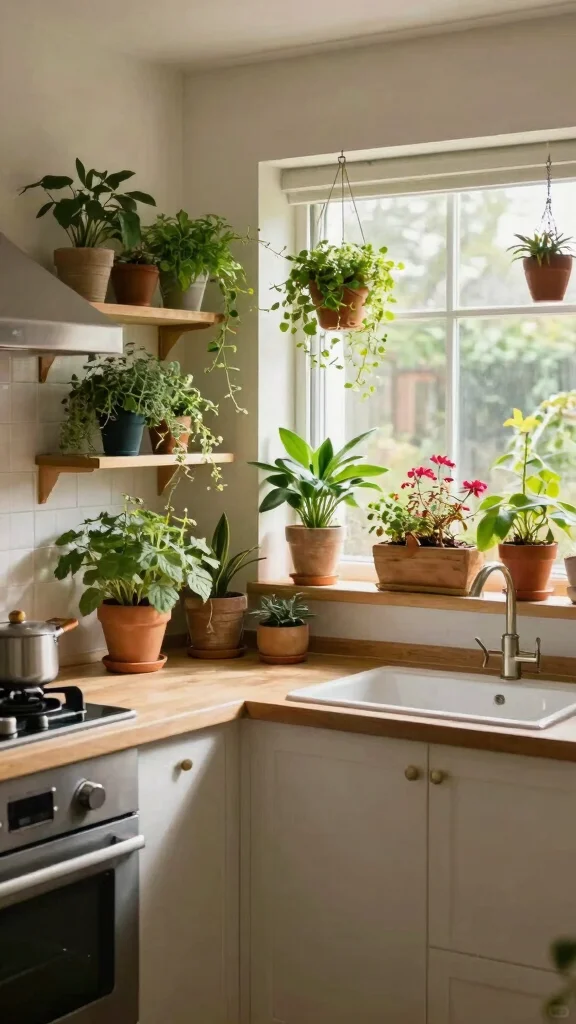
Incorporating plants into your kitchen not only enhances its beauty but also brings life and freshness to your cooking space. With so many creative ideas, there’s no reason to limit yourself when it comes to indoor gardening. Whether you opt for wall-mounted herb gardens or cheerful edible flowers, the possibilities are endless. Let your kitchen flourish and inspire you to create delicious meals with both style and sustainability in mind.
Note: We aim to provide accurate product links, but some may occasionally expire or become unavailable. If this happens, please search directly on Amazon for the product or a suitable alternative.
This post contains Amazon affiliate links, meaning we may earn a small commission if you purchase through our links, at no extra cost to you.
Frequently Asked Questions
What are practical plants in kitchen ideas that fit a small space without getting in the way?
You can absolutely bring life to a small kitchen with plants in kitchen ideas that stay out of the way. Start with compact, edible options like basil, chives, parsley, and microgreens, plus petite greens such as baby lettuce. Use vertical solutions—wall-mounted herb racks, magnetic planters on the fridge, or hanging baskets—to free counter space. Choose self‑watering pots or moisture meters to keep easy care houseplants healthy with minimal fuss. Place your favorites on a sunny windowsill or a bright shelf, and rotate plants as seasons change. With these moves, your small space gardening becomes a vibrant, usable kitchen garden rather than a cluttered corner.
Bonus tip: harvest herbs regularly to encourage fresh growth and keep flavors vibrant.
How can I start an herb garden ideas in a tiny kitchen without taking over counter space?
Turn a tiny corner into a dedicated herb garden ideas zone by using vertical space and the sunniest spot you have. Opt for compact pots or a tiered shelf near a window, and group herbs with similar water and light needs. Consider a narrow 2‑tier rack or a magnetic strip for rosemary, basil, mint, and thyme. Use good drainage and a lightweight, well‑draining soil mix, and water only when the top inch of soil is dry. If counter space is precious, try a windowsill planter or a hanging basket—your kitchen windowsill plants will thrive while keeping counters clear. This approach keeps small space gardening practical and delicious.
Which kitchen windowsill plants are best for beginners and easy to care for in a small kitchen?
For beginners, stick to herbs and greens that love bright light and shallow pots: basil, parsley, chives, thyme, and mint. These kitchen windowsill plants are forgiving, kitchen-friendly, and harvestable in minutes. Add a shallow tray of baby lettuce or microgreens to maximize a small space. Use bright, direct sun if you can; otherwise provide supplemental light with a compact grow light. Keep soil evenly moist but not soggy, and trim regularly to encourage bushy growth. When cared for thoughtfully, these plants transform a windowsill into a productive, edible display—perfect for indoor plant decoration in small spaces.
What are the best easy care houseplants that fit inside a kitchen and still look decorative while you grow food?
Pair practicality with style by mixing edible herbs with low‑maintenance decor. Choose easy care houseplants like basil and oregano (edible and fragrant) alongside decorative options such as a compact rosemary topiary or lemon balm for scent. A bright windowsill or shelves at counter height keeps everything visible and accessible, turning your space into a chic indoor plant decoration zone without sacrificing functionality. Use matching containers, rotate plants seasonally, and group by water needs to simplify care—your kitchen will feel alive and organized, not crowded.
How can I arrange 12 kitchen plant ideas to make the space feel alive without getting in the way?
Think vertical, modular, and edible-forward. Create a dedicated plant corridor along the window by stacking shelves, installing a slim wall rack, and using hanging planters to keep counters clear. Group herbs and edibles by light and water needs, and place high‑sun plants on the windowsill while lower light varieties go to a shaded shelf. Rotate crops with the seasons so you always have something fresh to harvest. With smart containers, proper watering, and tidy spacing, these plants in kitchen ideas deliver lush indoor plant decoration while preserving small space gardening practicality.
Related Topics
kitchen plants
indoor gardening
herb garden ideas
small space gardening
easy care houseplants
kitchen windowsill plants
home decor
green living
beginner friendly
minimalist design
fresh herbs
natural decoration